Date: 22 June 2018 · Location: Kabaty depot (STP Kabaty), Warsaw Metro · Organisers: Koło Miłośników Metra, hosted by Metro Warszawskie
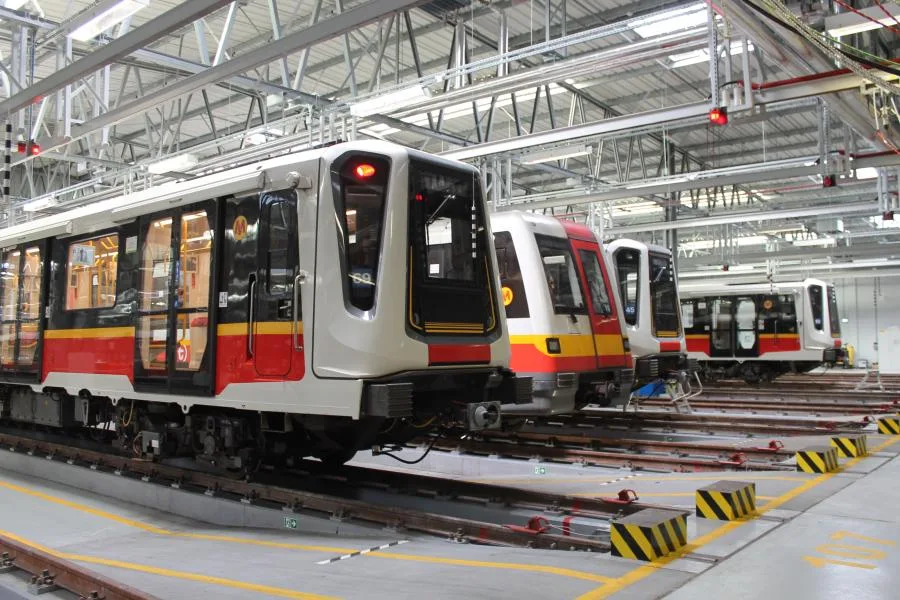
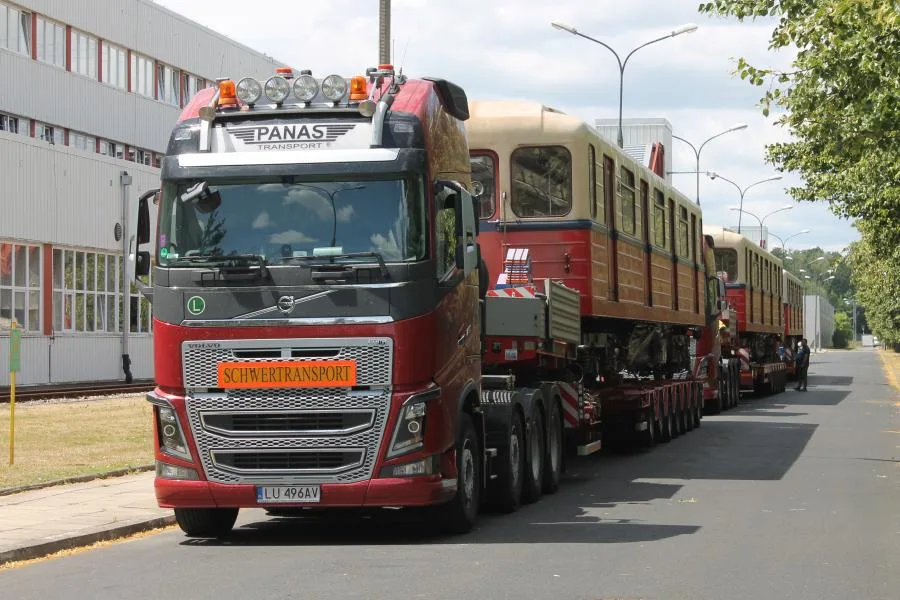
Warsaw’s metro trains are stabled and maintained at the Kabaty depot (Stacja Techniczno-Postojowa Kabaty). On 22 June 2018 more than 20 members of the Metro Enthusiasts’ Circle (KMM) saw its two newest buildings: a hall for 14 trains and the train-wash building. Along the way we came across car 001, the very first Warsaw metro car, being loaded onto a lorry.
Past “the border” to the eastern throat
This was our third meeting at the depot since the Circle was revived. At 11:30 we collected passes at the gatehouse, had a safety briefing and set off for the eastern throat, which we had never visited. Beyond the footbridge over the tracks we walked right past the tunnel portal, known as “the border”. Further on the road rose, while beneath us tunnel B1 descended towards A1 Kabaty station.
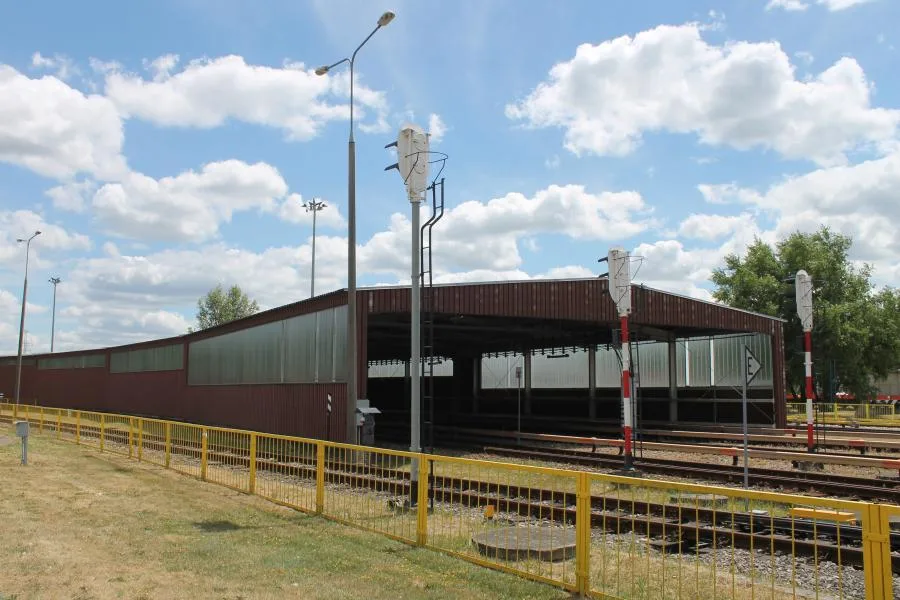
Building no. 6: the stabling and inspection hall
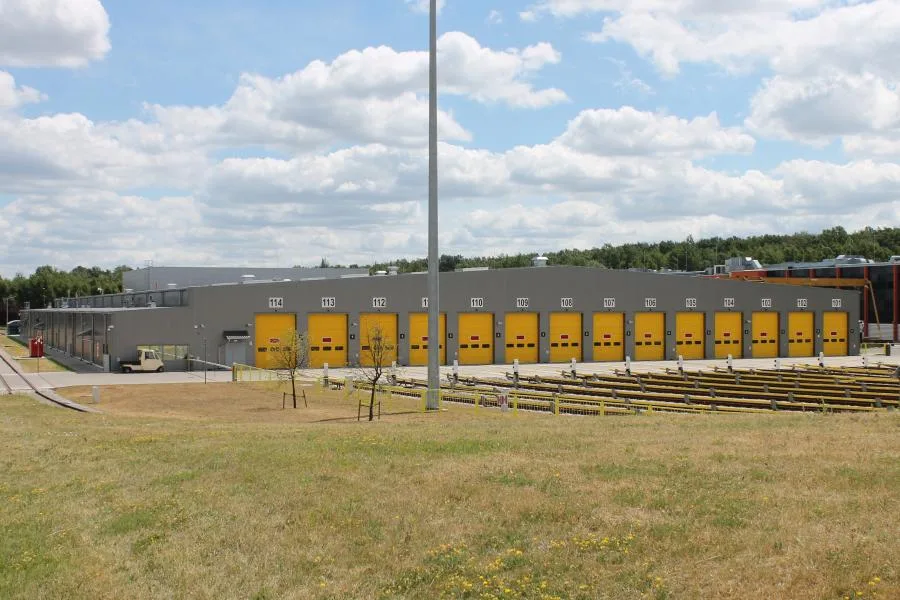
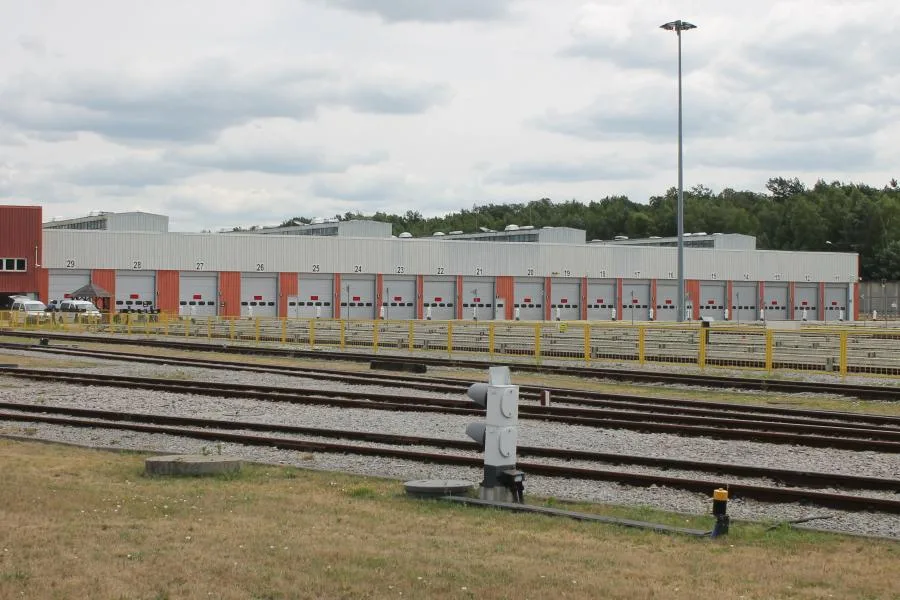
Metro Warszawskie began planning an expansion of the depot in 2007, and a 2008 masterplan included a “small depot hall”. The tender was announced in October 2014. Nine bids came in, and after an appeal to the National Appeals Chamber the contract was signed in October 2015 with Tor-Kar-Sson. It was budgeted at PLN 62 million gross, ended up almost PLN 3 million more and took six months longer. The hall was handed over on 31 March 2017.
| Parameter | Value |
|---|---|
| Dimensions | 73.4 × 132.71 m, up to 8.46 m high |
| Tracks | 14 (nos. 101–114), each with an inspection pit and overhead power supply |
| Track length inside | 128.4 m, one train per track |
| Maintenance | higher-level inspections, e.g. P3 for Inspiro 11 days, P2 for Metropolis 4 days |
| Contractor | Tor-Kar-Sson, handed over 31 March 2017 |
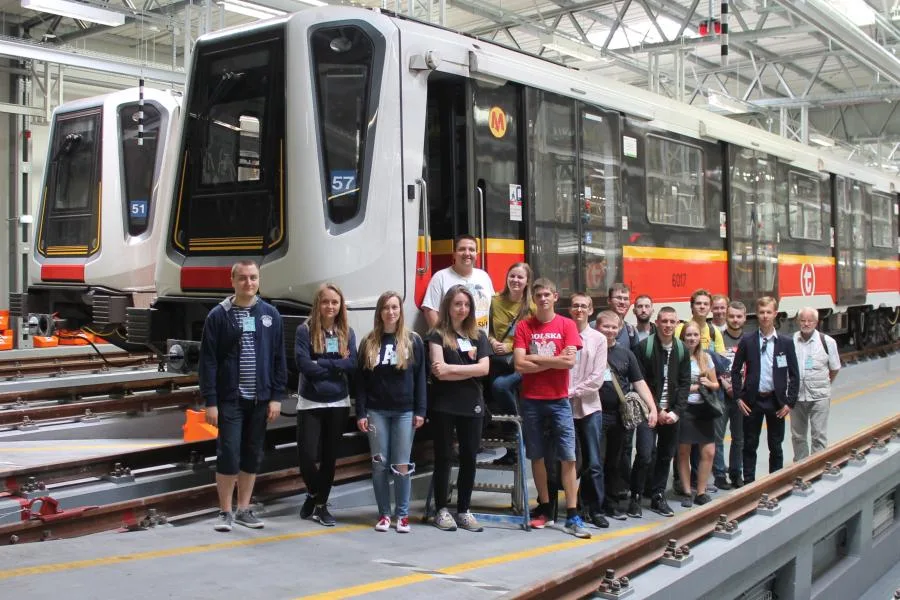
The northern annex houses workshops, stores, a switchroom, offices and staff rooms. Trains enter the hall through yellow roller doors. Six trains were inside that day: five Inspiro and one Metropolis, some undergoing minor repairs. We took a group photo by Inspiro no. 57 on track 103.
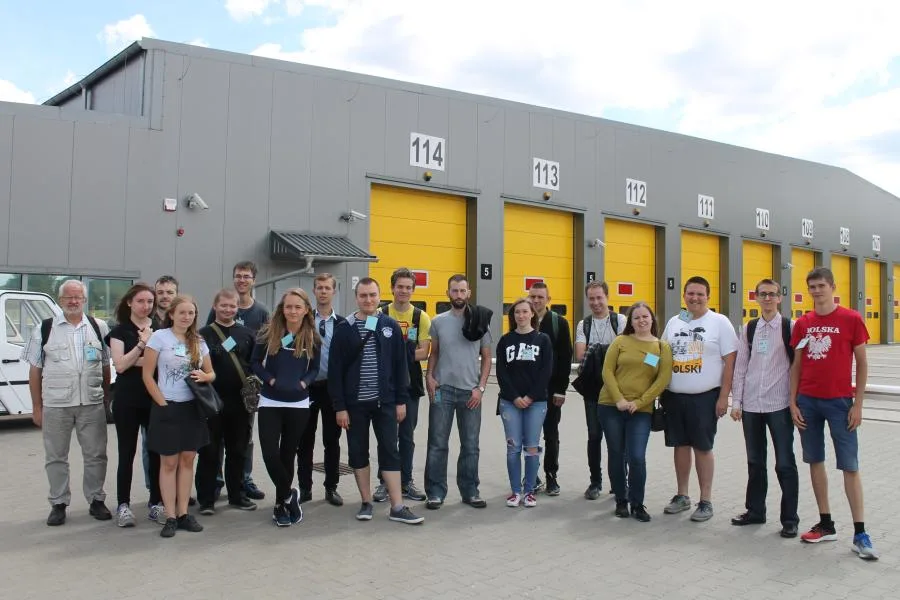
In front of the hall runs a road to the depot’s second gate, which may one day become as important as the main one. To the east is building no. 20, a high-bay store with 8 m racks for spare parts. To the south is building no. 7, the maintenance services base, which staff jokingly call “Lidl” because from outside it resembles a store of that chain.
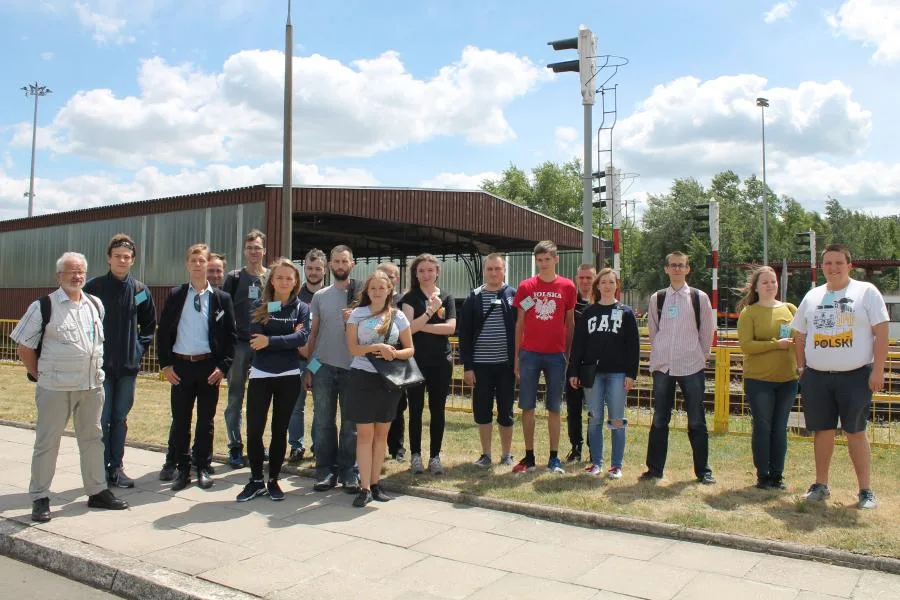
On the way back we spotted two 208Kg/M covered wagons from 1987, used as barrier wagons when metro trains are moved by rail. At “the border” we stopped for longer and took another group photo.
A surprise: car 001 on a lorry
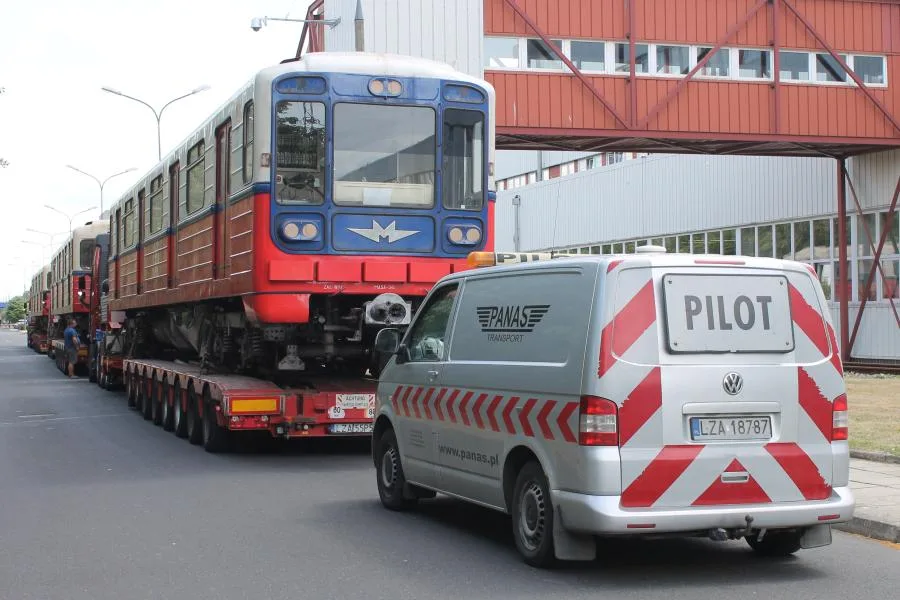
On the road to the gate, a convoy of Panas Transport low-loaders was forming. Three vehicles carried half of 81-series train no. 01: cars 436, 435 and 001. This is how cars travel to ZNTK Mińsk Mazowiecki for P5 overhauls, after which they receive the ZTM livery. It was the last chance to see the first car of the Warsaw metro, built in the Soviet Union, in its original colours.
Building no. 2: wash, vacuum and paint shops
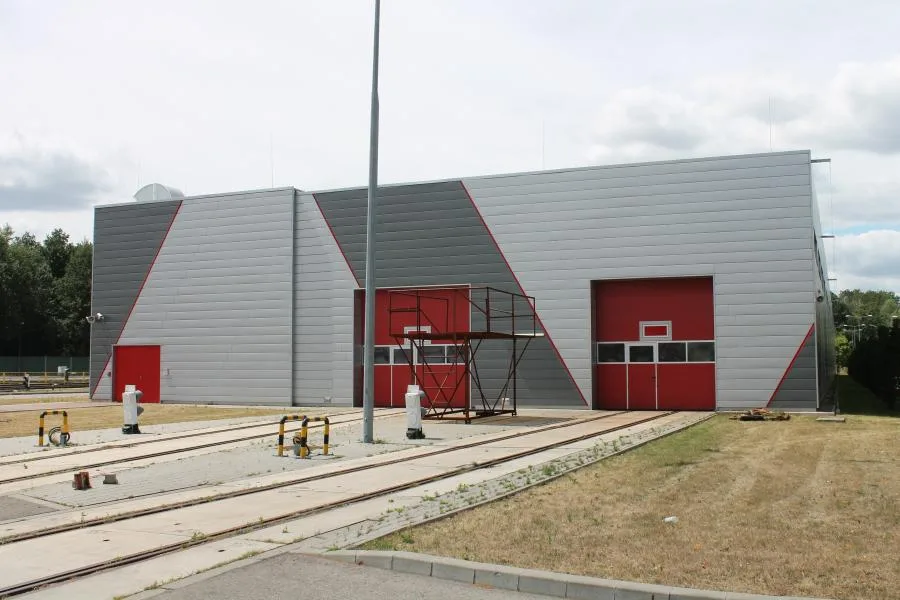
The building at the western end of the depot was created by rebuilding a warehouse in 2013–2015. Both stages were carried out by Budimex for just under PLN 50 million gross. This allowed the train wash to move out of the main depot hall into a building of its own.
| Part of building no. 2 | Track | Use |
|---|---|---|
| Southern bay | 93 | paint booth with drying room, paint preparation, shot-blasting; workshops and stores upstairs |
| Middle bay | 94 | train wash |
| Northern bay | 95 | vacuum cleaning chamber |
| Dimensions | – | 134 × 28.77 m, 10.95 m high, two storeys |
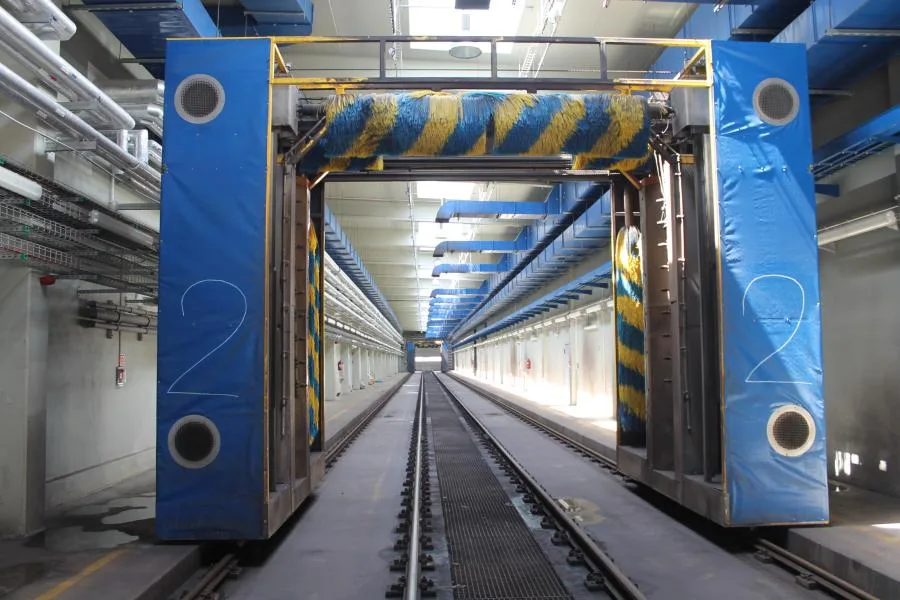
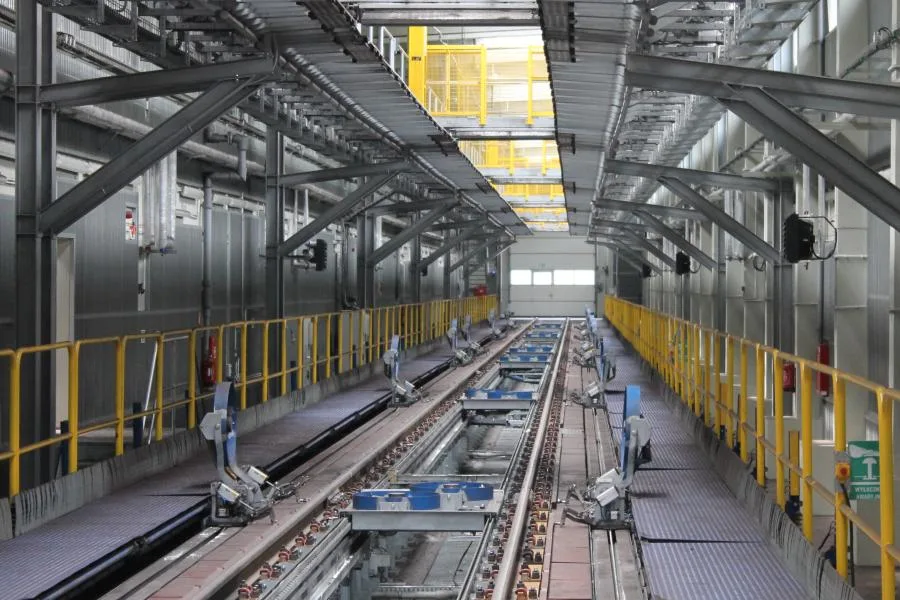
The wash uses two mobile gantries with nozzles and brushes that travel on rails along a stationary train. Each train family has its own programme, since lengths and door and window layouts differ. A wash takes about 40 minutes and uses 800–900 litres of water in a closed loop. Every train is washed at least once a fortnight. There is no third rail in the building, so trains are moved in and out by a diesel locomotive.
Before washing, a train goes into the vacuum chamber. Moving nozzle arms clean the underframe, and from two walkways along the hall staff step onto the roof to change filters. The gates from the walkway to the roof open only once a train is in the chamber. Tilting grilles next to the walkways prevent people and tools from falling.
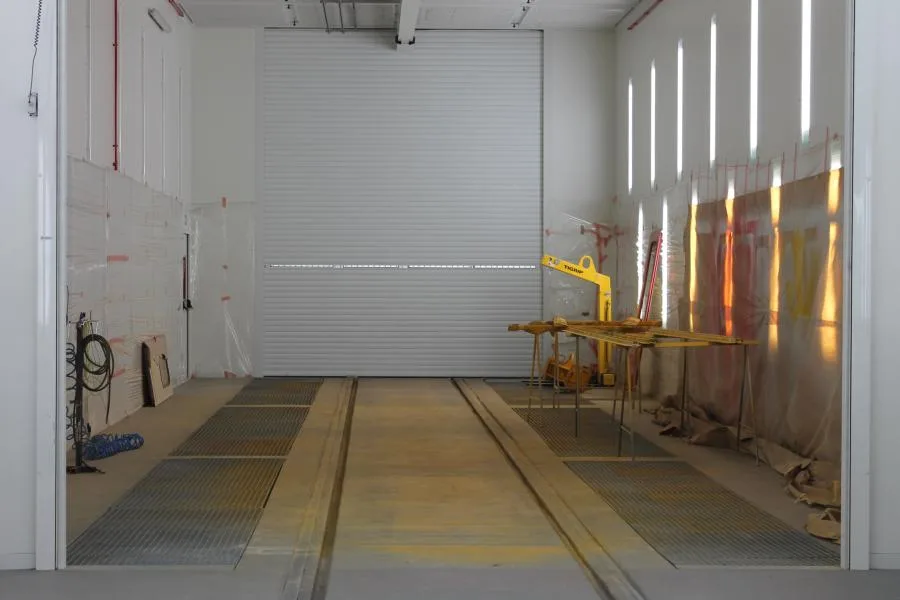
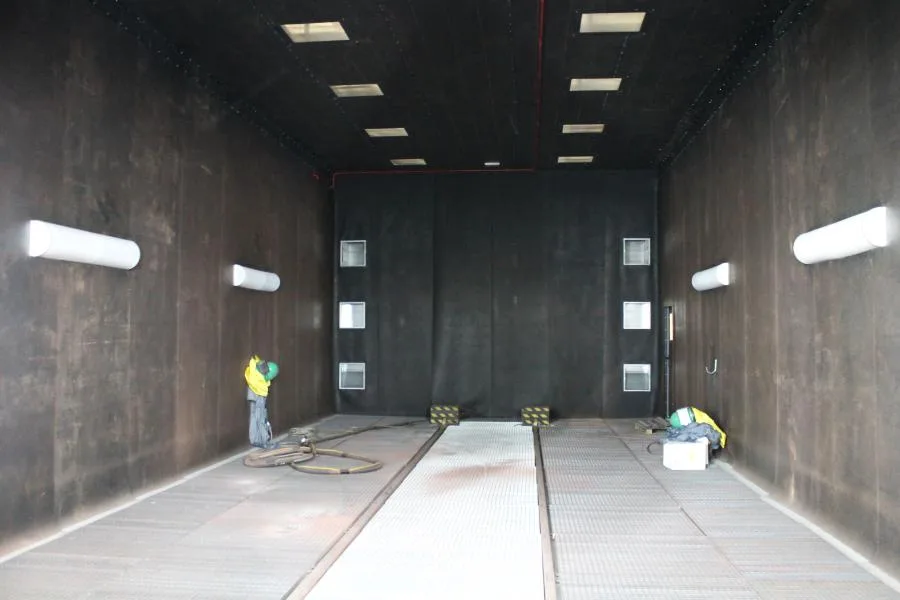
The paint shop and shot-blasting room repair coatings on train components. Thanks to the track, even a bogie can be rolled in. A rail with a trolley and hook runs under the paint-shop ceiling, and the blasting room is lined with rubber to reduce noise. We were told that KMM was the first organised group, apart from journalists, to visit the building. As we left, one of the three DH-350.11 hydraulic draisines from 2014, bought to serve line M2, was shunting nearby.
To finish: the main depot hall
Our guides also took us into the main depot hall. Every passenger train family was there: old and new Russian cars, Metropolis and Inspiro, plus diesel locomotive LM-400.00. The highlight was car 022 from train no. 11, the Christmas train of December 2017. It had returned from ZNTK the day before in its new livery, still without headlights or seats. The visit ended at the gatehouse at about 13:20.
We thank Metro Warszawskie for the invitation and for showing us the newest buildings at Kabaty depot.
At a glance
| Date | 22 June 2018 |
| Location | Kabaty depot (STP Kabaty), Warsaw Metro |
| Participants | more than 20 |
| Building no. 6 | stabling and inspection hall, 14 tracks, handed over 31 March 2017, Tor-Kar-Sson |
| Building no. 2 | wash, vacuum chamber, paint and blasting shops; 2013–2015, Budimex, just under PLN 50m |
| Extras | cars 436, 435, 001 on lorries to ZNTK; car 022 after overhaul |
Frequently asked questions
How many trains does the Kabaty stabling and inspection hall hold?
14, one on each of tracks 101–114, which are 128.4 m long inside the hall.
How much water does washing a Warsaw metro train use?
About 800–900 litres in a closed loop. A wash takes around 40 minutes, and every train is washed at least once a fortnight.
Why are trains moved into the Kabaty wash by a diesel locomotive?
The wash building has no third rail.
Where were Warsaw metro cars overhauled in 2018?
At ZNTK Mińsk Mazowiecki. 81-series cars and Metropolis trains were taken there by road for P5 overhauls.
Trip report originally published on the website of the Metro Enthusiasts’ Circle (Koło Miłośników Metra) (25 June 2018). Text rewritten and translated by the Zrobotyzowani editorial team. Original Polish report on kmmetra.pl. Photos: Koło Miłośników Metra.