Date: 13 August 2018 · Location: C8 Płocka station construction site, Płocka Street, Wola, Warsaw · Organisers: Koło Miłośników Metra, hosted by Gülermak
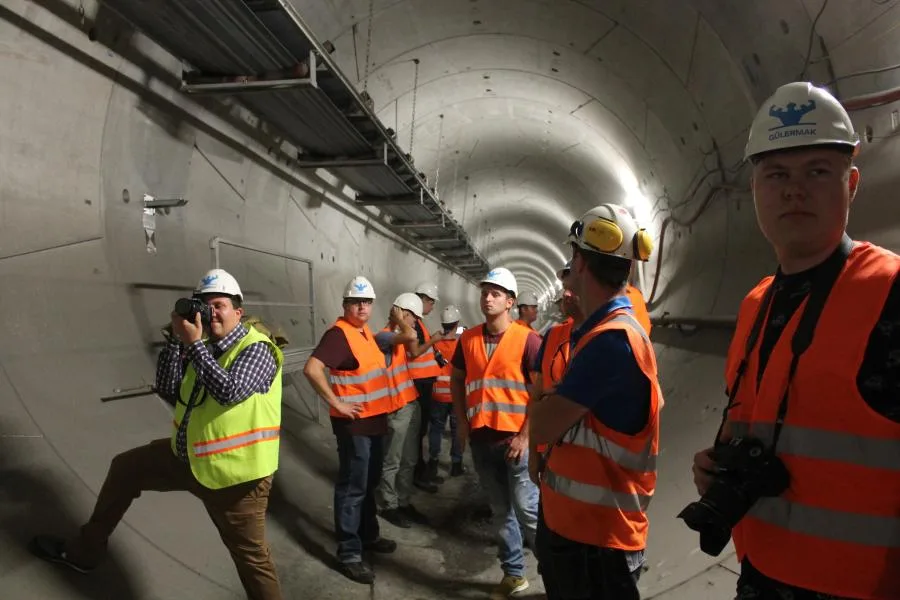
On 13 August 2018 16 members of the Metro Enthusiasts’ Circle (KMM) went down to the bottom of the C8 Płocka station site. We saw four tunnel portals, walked into one of the tunnels and looked out over thousands of lining segments on the roof slab. After this visit we had seen all three stations of stage I of the western section of line M2, built by Gülermak.
How station C8 took shape
The station lies under Płocka Street, south of its junction with Wolska Street.
| Date | Construction stage of station C8 |
|---|---|
| 29 Sep 2016 | contract signed |
| Jan 2017 | site fenced, preparatory works |
| Apr–Dec 2017 | diaphragm walls of the station box |
| Jan 2018 | diaphragm walls of the entrances |
| Feb 2018 | initial excavation |
| Mar 2018 | roof slab |
| Apr 2018 | intermediate slab, half of the level -2 excavation |
| Jun 2018 | base slab, start of concreting the platform-hall columns |
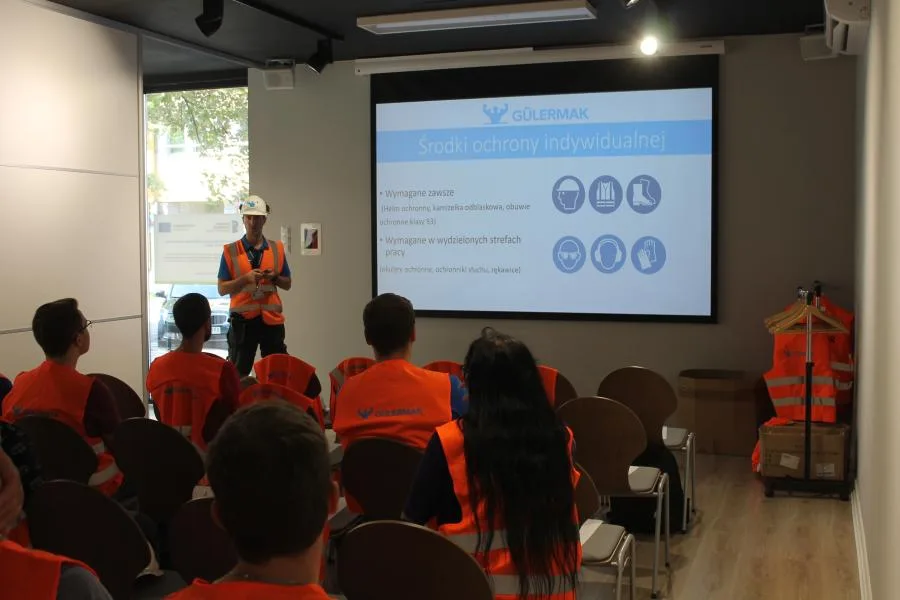
At 10:30, at the information point at 8 Płocka Street, we had a safety briefing and received protective gear. Staff showed us two boards: the landscaping plan around the station and the alignment of tunnels D9 to C9 Rondo Daszyńskiego, marked with the current positions of the TBMs.
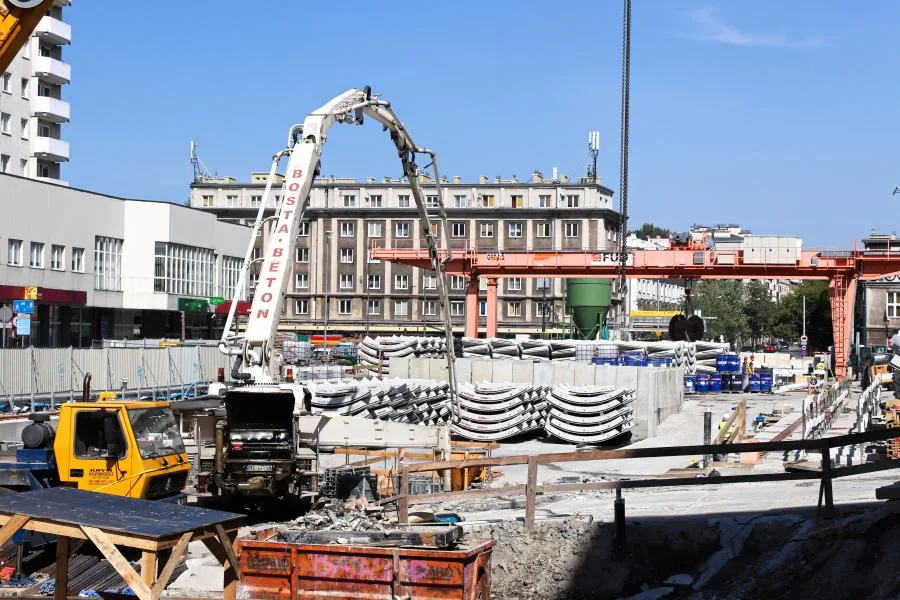
We crossed the site past office containers and a wheel wash that keeps lorries from dirtying the streets. By the station stood concrete mixers, a crane, a gantry crane and stacks of segments. Three access openings were still left in the roof slab. A stair tower in the southern one took us straight down to level -2.
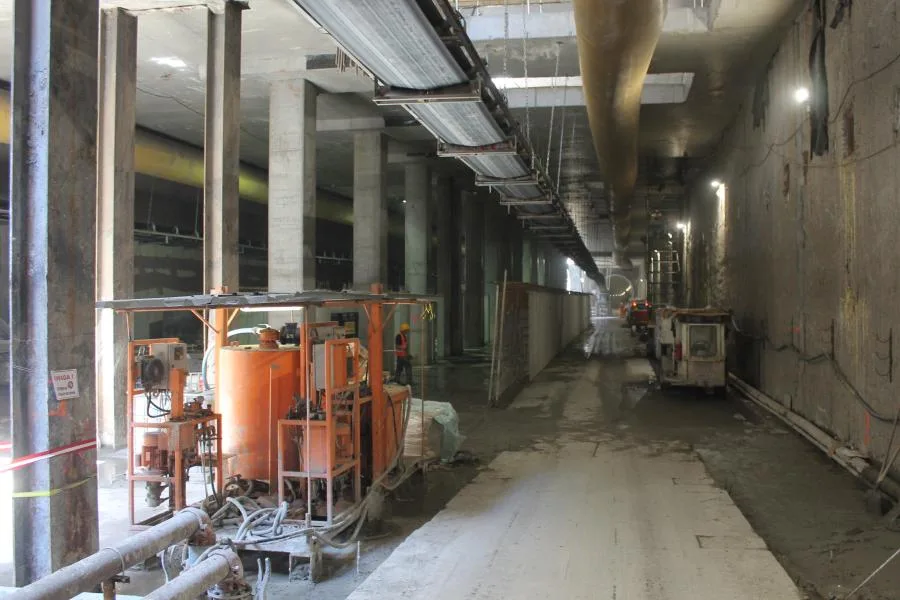
The under-platform level and the D9 portals
We stood by the future track towards the city centre. Behind us were the portals of tunnels D9. Boring had begun in July, but the cradles, thrust frames and several-metre-long “false tunnels” were still in place. Ahead rose square columns and the under-platform walls that will carry the platform slab. Between the diaphragm wall and the under-platform structure stood a multicar, a vehicle that brings segments to the TBM working in the tunnel. At the far end, formwork for the lift shaft between platform and mezzanine was ready.
Krystyna and Maria three months early
At the northern end of the station were another opening and two more tunnels, this time without cradles, because here the TBMs had finished. Tunnel D8 N, bored by S646 Krystyna, was completed on 29 May, and S644 Maria broke through with tunnel D8 S on 16 June. Both were three months ahead of schedule. After maintenance they were pulled to the other end of the station, and on 3 and 16 July they set off on their last drive, towards the existing part of line M2.
20 metres into tunnel D8
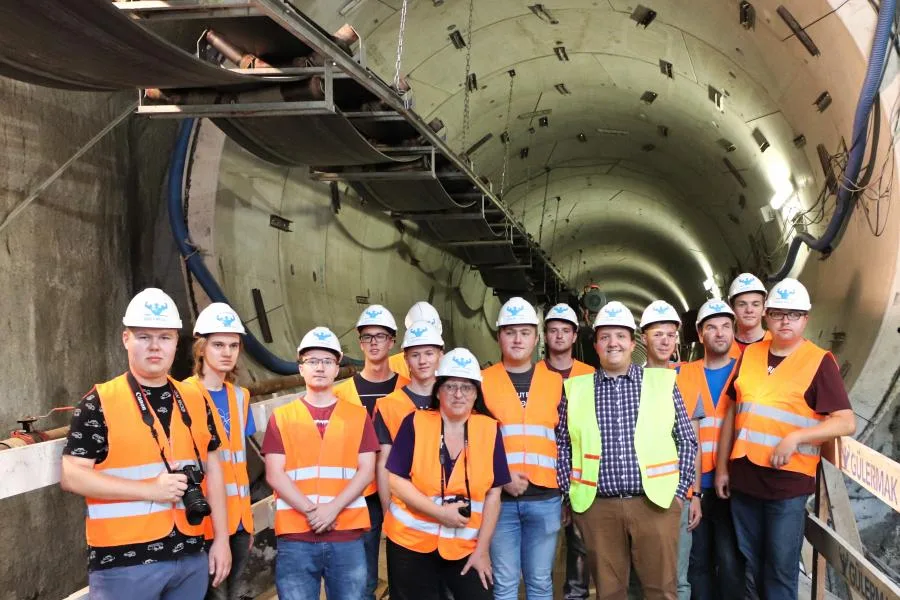
The surprise of the day was a walk into tunnel D8. We went about 20 m towards C7 Młynów. Ahead ran a straight under Płocka Street with a left-hand curve at the end. We looked closely at the segments, their joints and painted numbers, while overhead a conveyor belt carried spoil all the way to C6 Księcia Janusza station.
Returning along the eastern side of the station we passed more multicars. By the D9 portals hung two religious signs: a statue of the Virgin Mary and a plaque with the Arabic phrase “in the name of God, the Most Gracious, the Most Merciful”, a sign of the site’s international workforce.
Segments on their way down
On the mezzanine, columns and reinforcement for the walls of future technical rooms were going up. As we reached the northern opening, workers began lowering tunnel lining. The gantry crane moved six segments in two lifts of three straight onto a multicar.
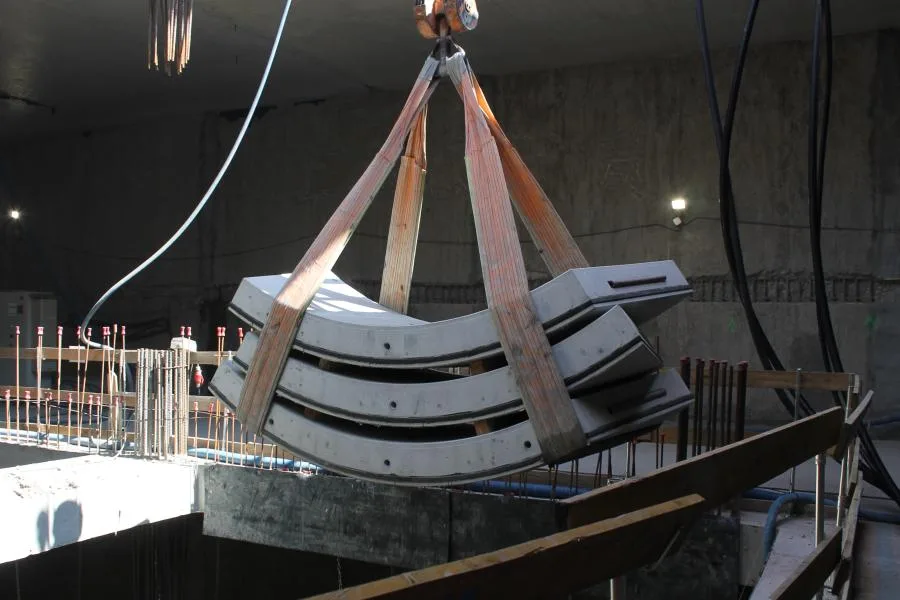
We came up by the stair tower at the northern gate. On the roof slab lay a real sea of segments.
| Western-section lining segments | Data |
|---|---|
| Ring | 1.5 m wide, 0.3 m thick |
| Elements per ring | 6: five of 5 t and a 1 t key segment |
| Production | contractor’s yard on Marywilska Street |
| End of production | 28 July 2018, set no. 3408 |
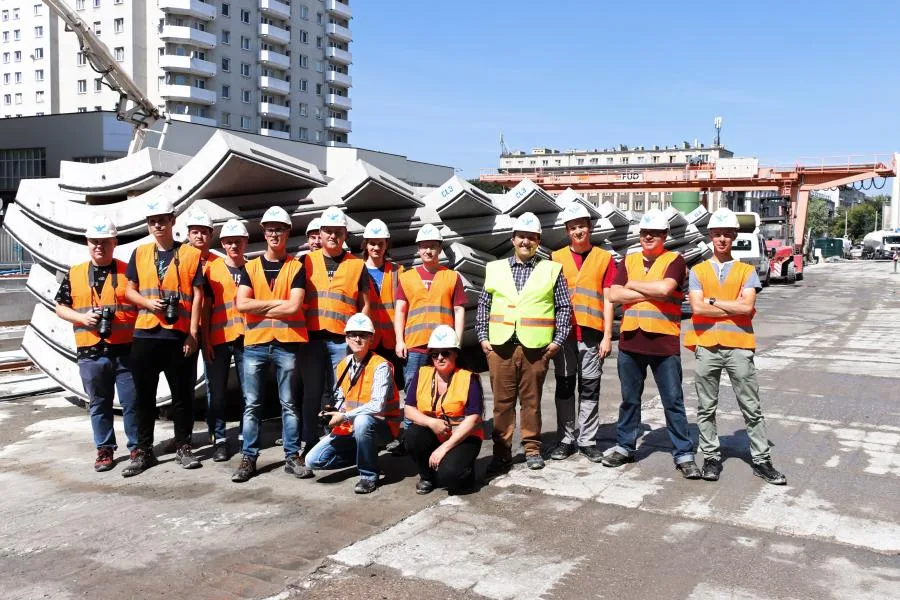
We took a group photo in front of the segments and the gantry crane. Just after 12:00 we returned our gear at the information point. We thank Gülermak for our fifth visit to the Wola metro works.
At a glance
| Date | 13 August 2018 |
| Site | C8 Płocka station, stage I of the western section of line M2 |
| Contractor | Gülermak |
| Participants | 16 |
| Tunnels D8 | N: S646 Krystyna, completed 29 May 2018; S: S644 Maria, breakthrough 16 June 2018 |
| Start of tunnels D9 | 3 July 2018 (Krystyna), 16 July 2018 (Maria) |
Frequently asked questions
How many segments make up a ring of the Wola metro tunnels?
Six: five of 5 tonnes and a 1-tonne key. Each ring is 1.5 m wide and 0.3 m thick.
When did the TBMs reach Płocka station?
Krystyna completed tunnel D8 N on 29 May 2018 and Maria broke through with D8 S on 16 June 2018, both three months ahead of schedule.
Where were the segments for the Wola tunnels made?
At the contractor’s yard on Marywilska Street. Production ended on 28 July 2018 with set no. 3408.
What is a multicar used for on a metro site?
It carries segments from the station to the TBM working in the tunnel.
Trip report originally published on the website of the Metro Enthusiasts’ Circle (Koło Miłośników Metra) (15 August 2018). Text rewritten and translated by the Zrobotyzowani editorial team. Original Polish report on kmmetra.pl. Photos: Koło Miłośników Metra.