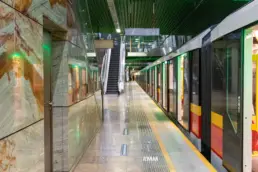
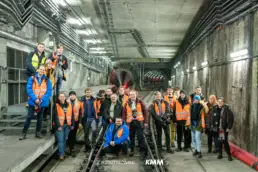
Date: 25 June 2022 · Location: A11 Politechnika metro station and ventilation building B11 under Pole Mokotowskie, Warsaw · Organisers: Koło Miłośników Metra and Zrobotyzowani, under the patronage of Metro Warszawskie

Under Pole Mokotowskie, where Varsovians arrange to meet “at the mushroom”, lies a hall few have ever heard of. On 25 June 2022, on the second tour of the series “See how the metro breathes underground”, the Metro Enthusiasts’ Circle (KMM) and Zrobotyzowani, under the patronage of Metro Warszawskie, made their way from the substation of station A11 Politechnika all the way to it.
The power control room
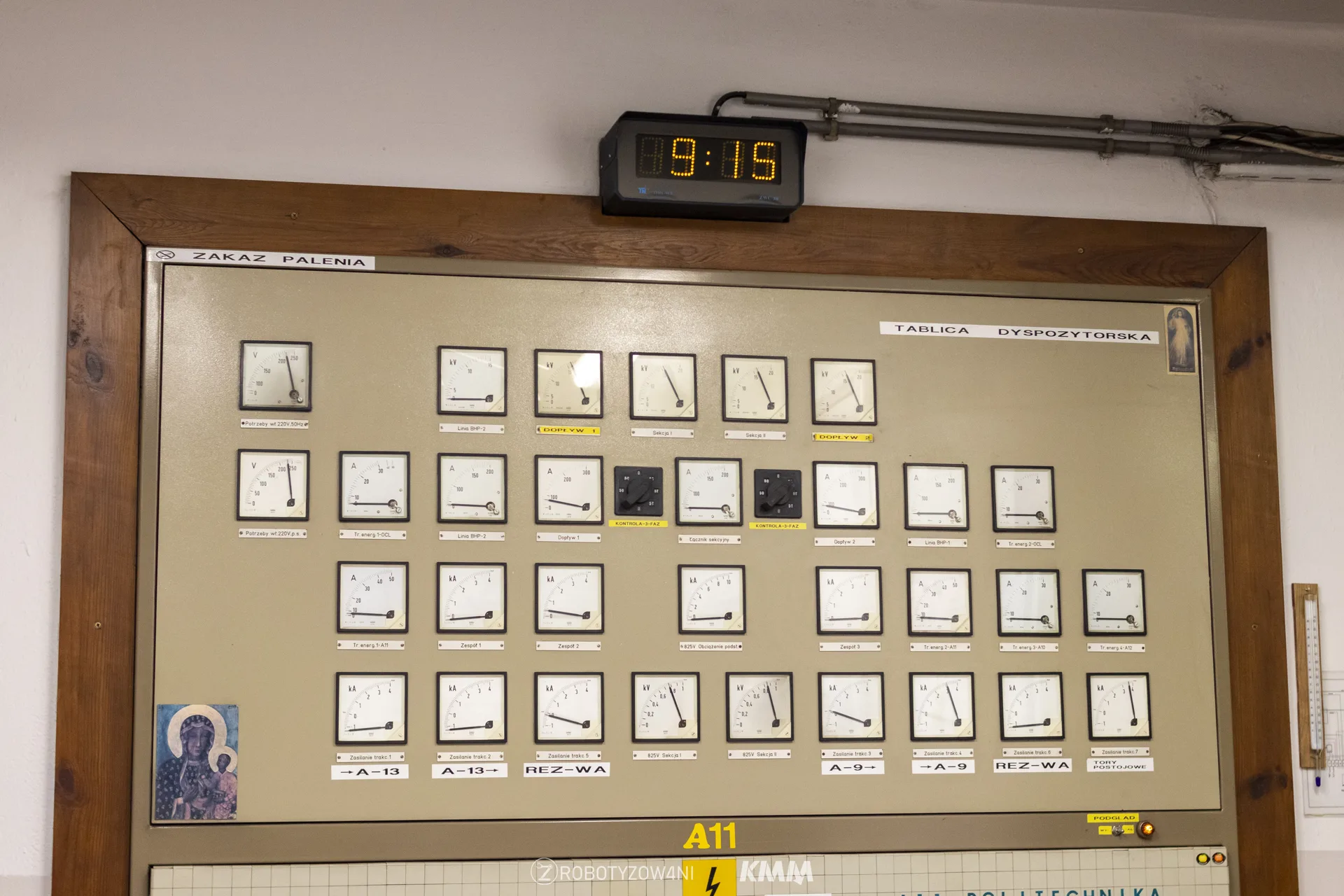
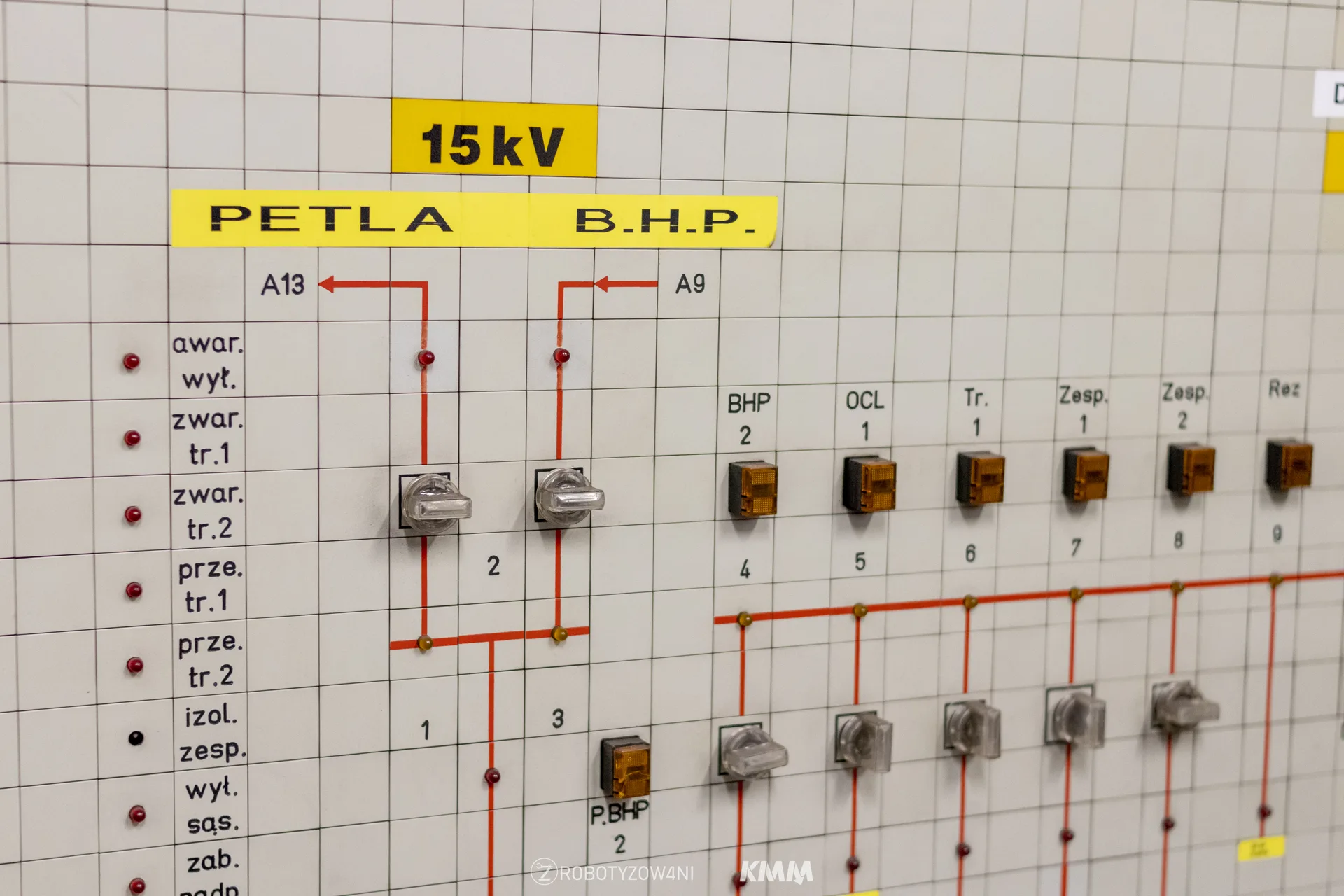
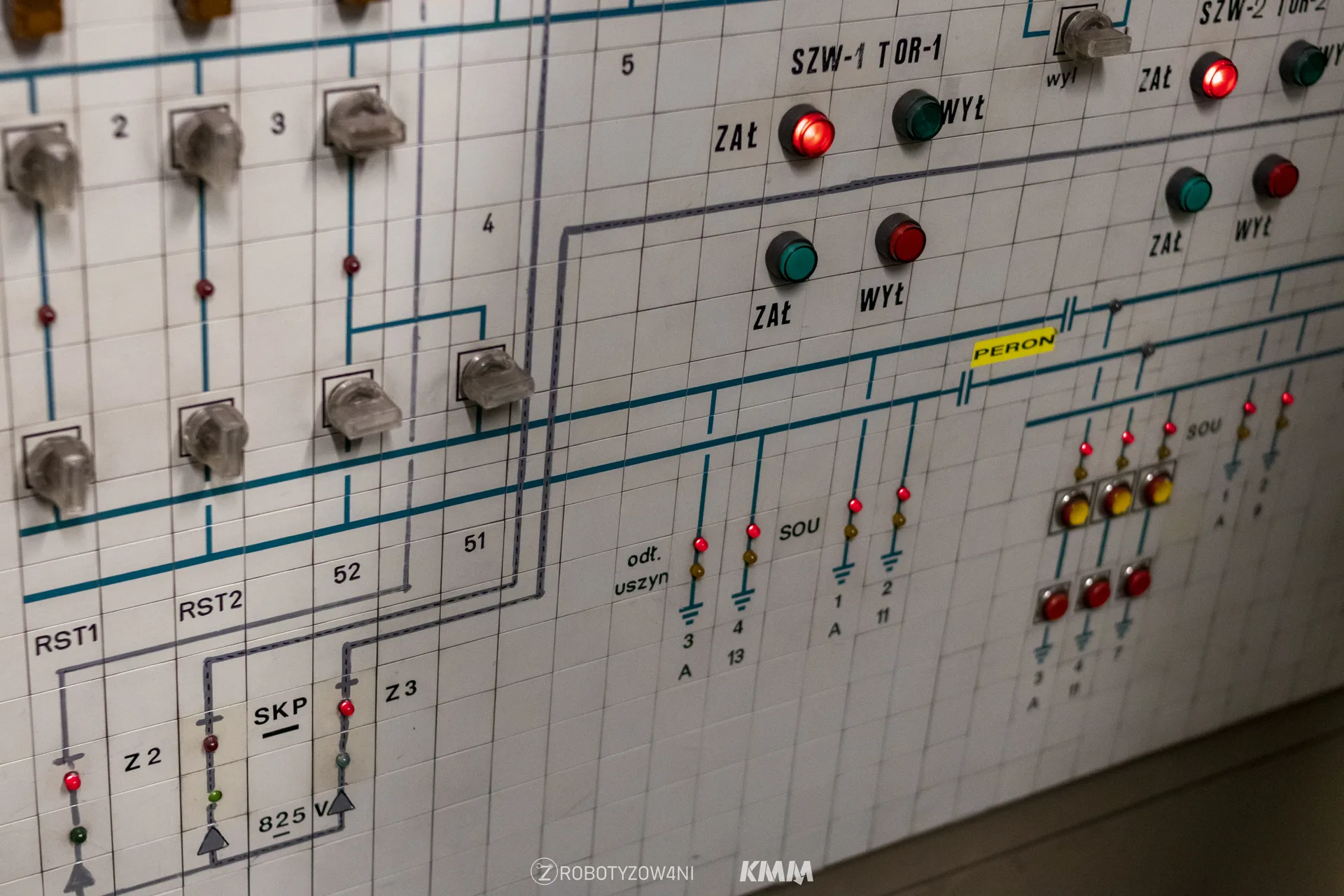
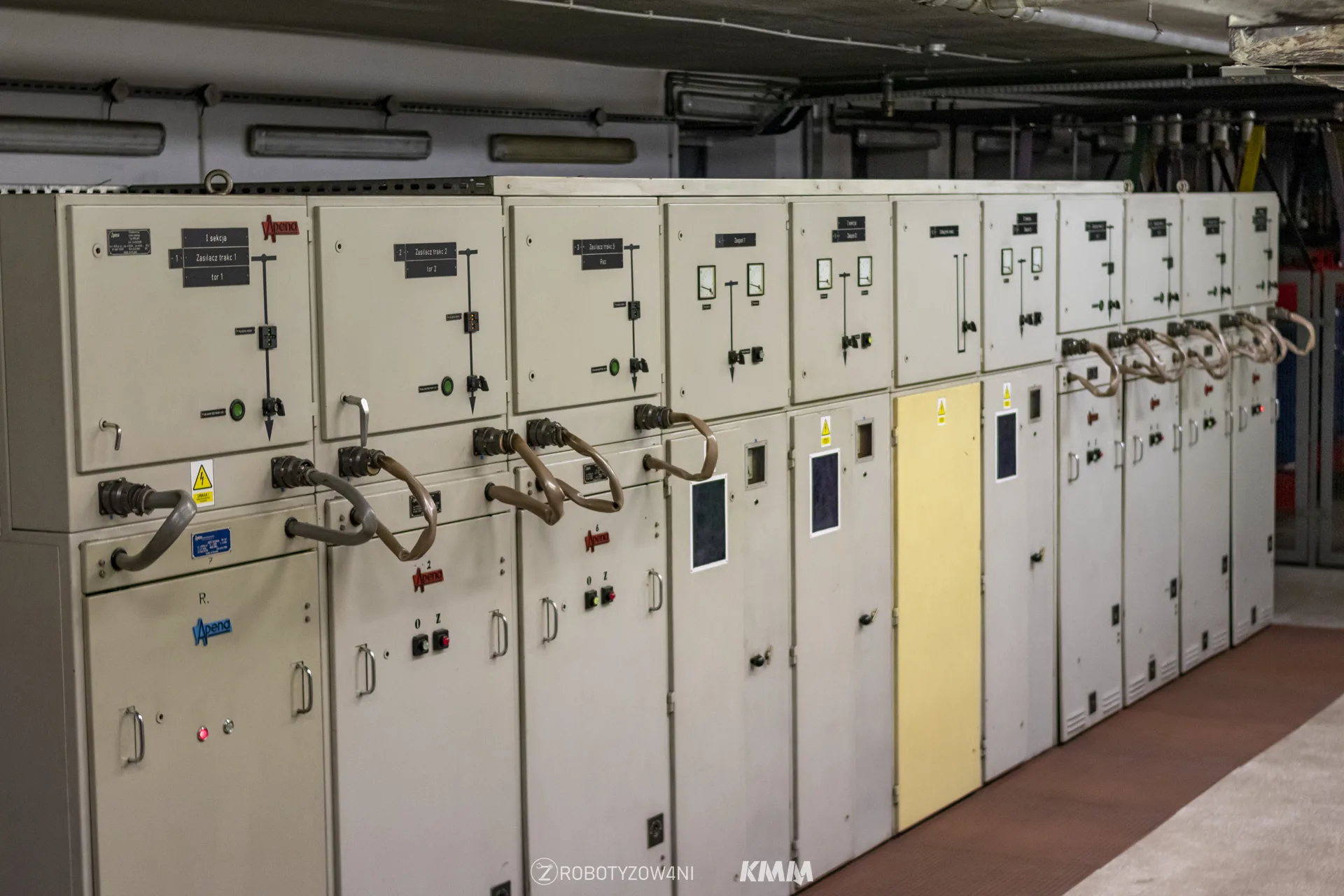
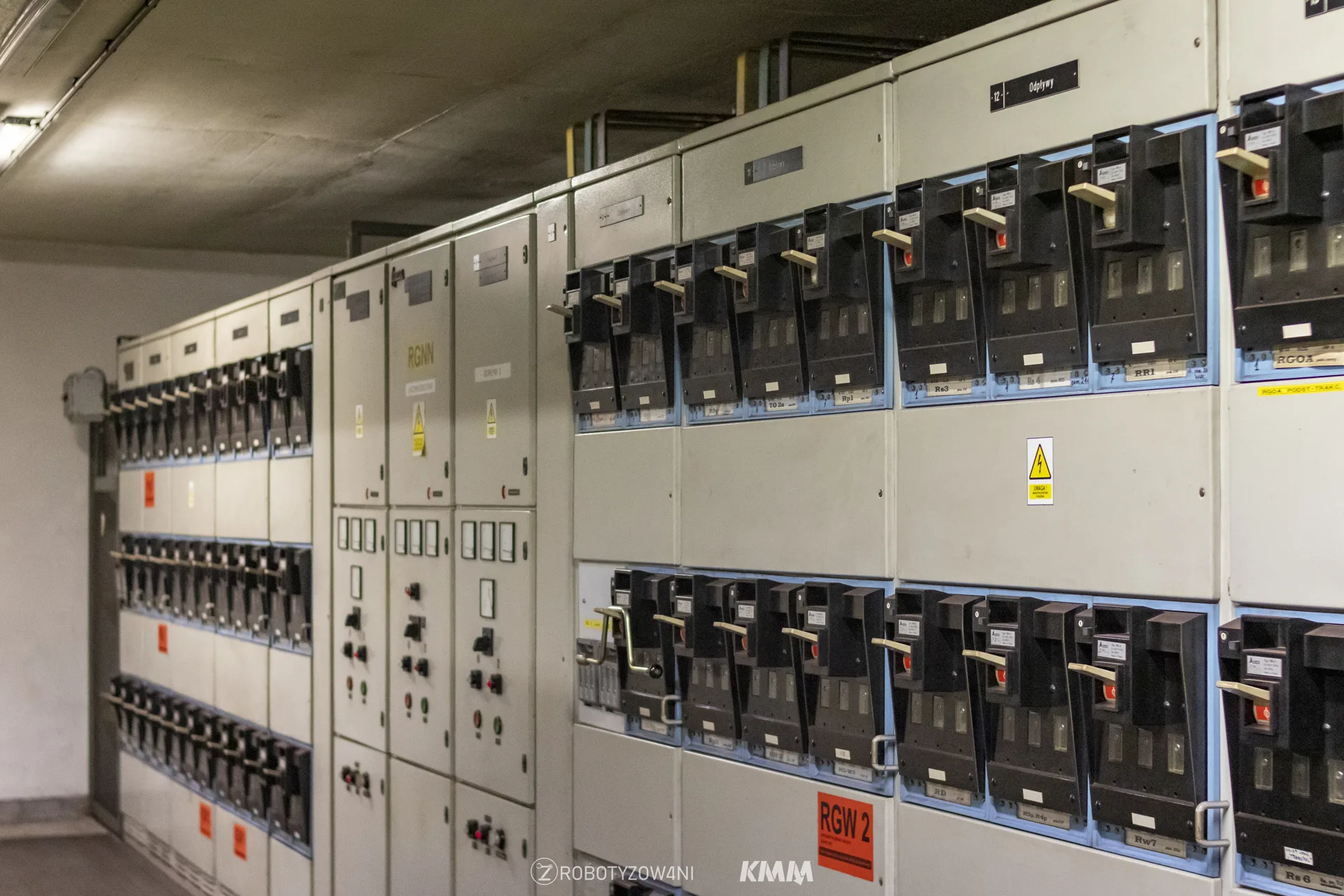
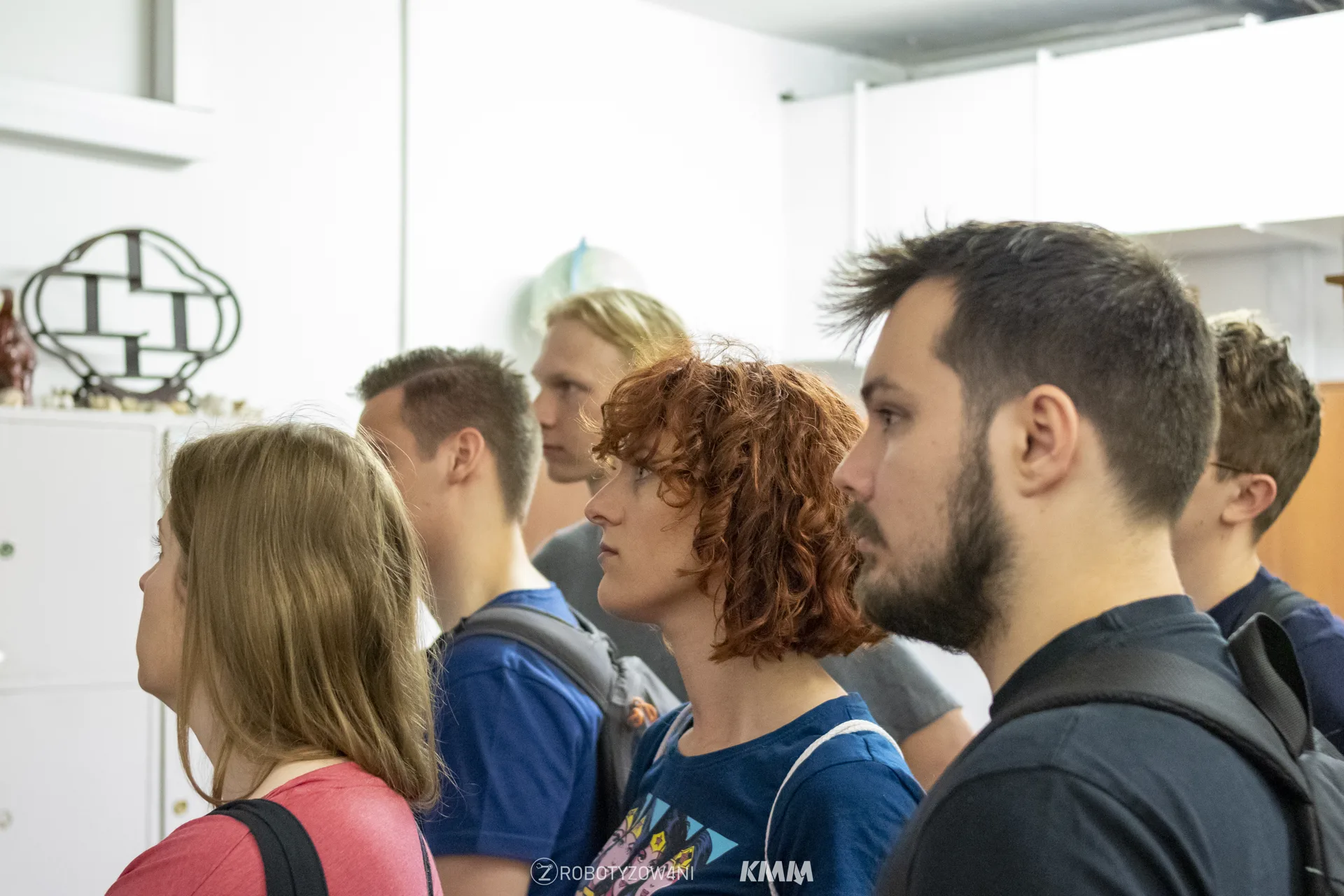
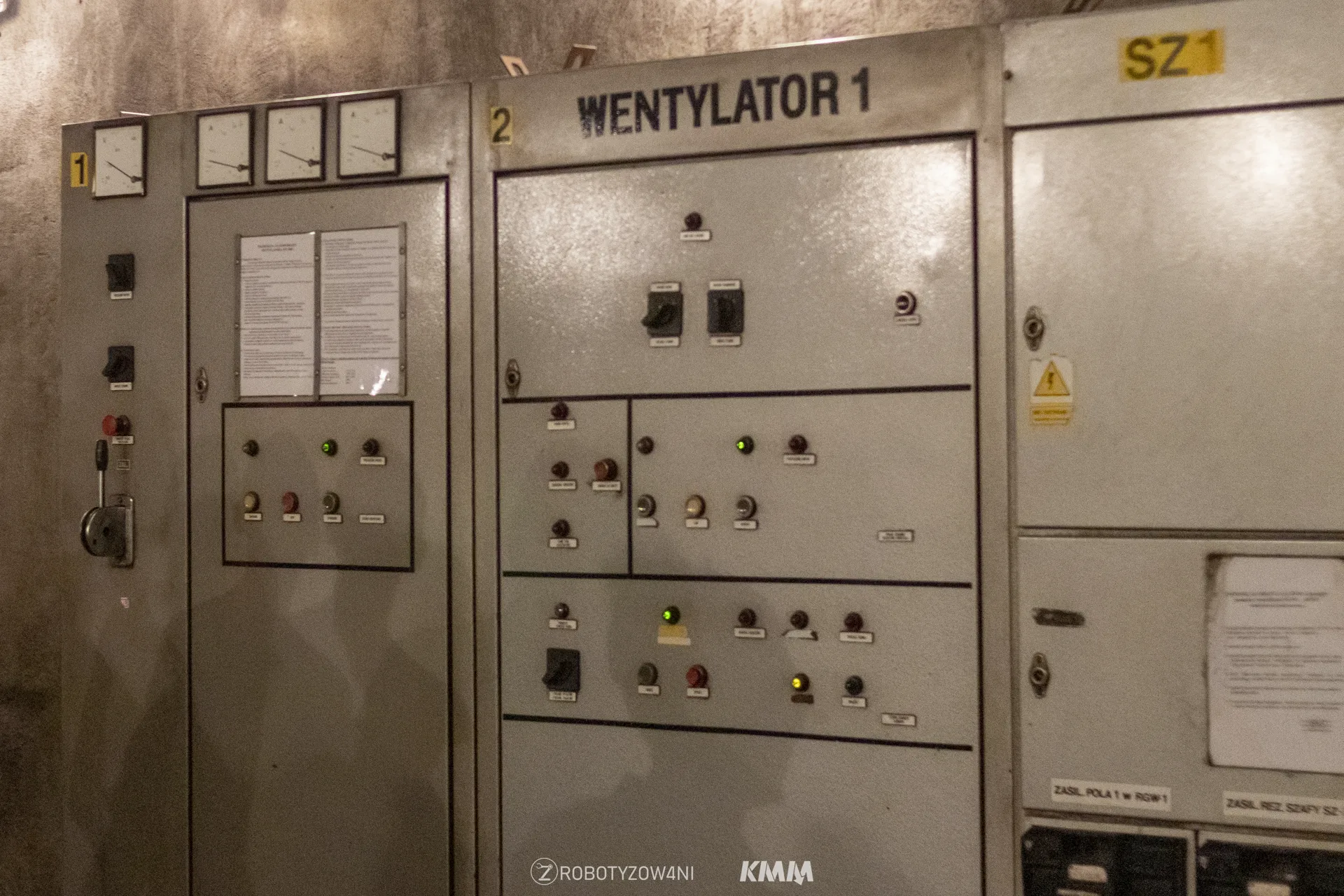
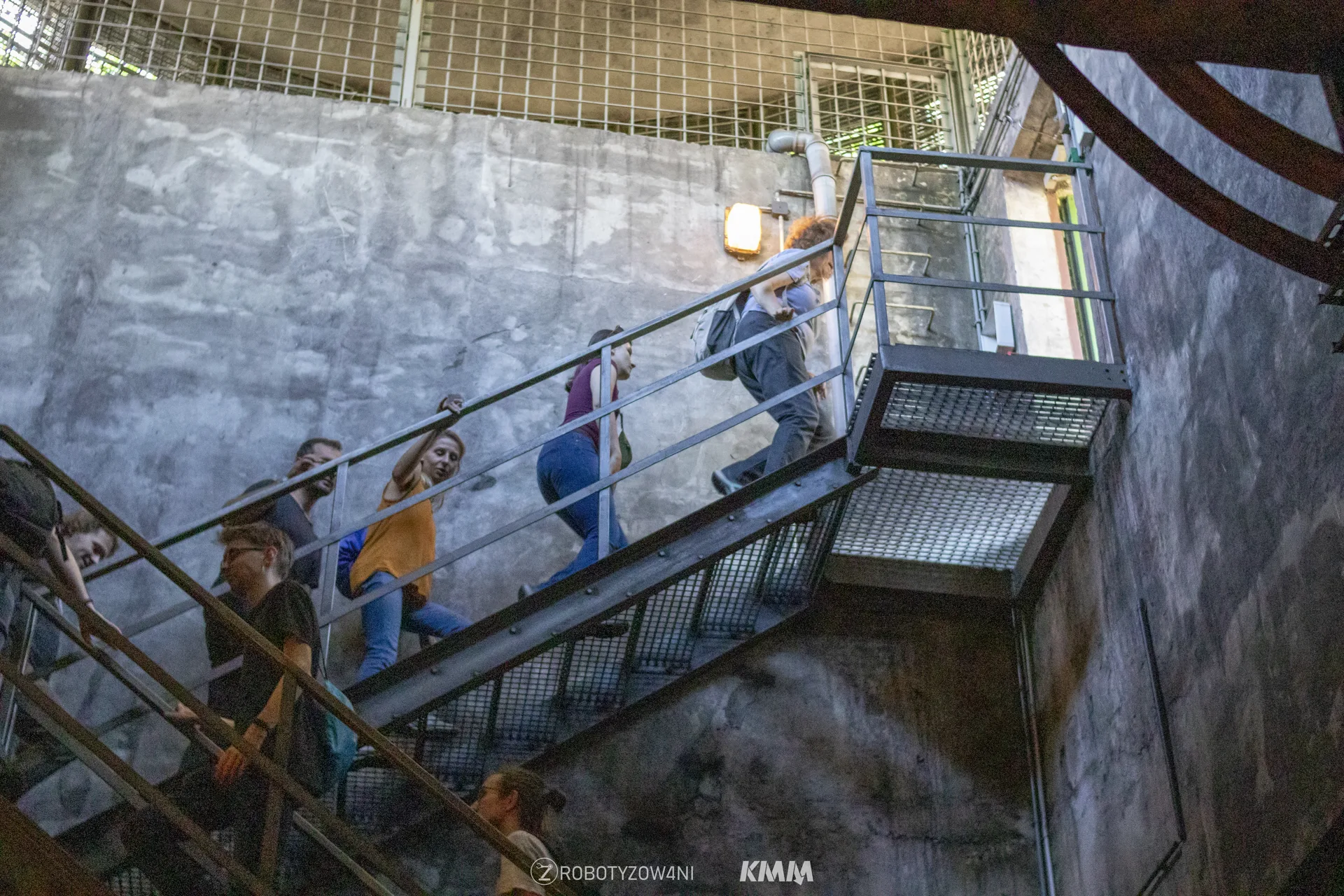
We met by the mosaic in the subway of Politechnika station. After a safety briefing we took the staircase from the subway down to the power control room. A member of the power staff showed us the high- and low-voltage switchgear from a safe distance and then gave a long, detailed account of the station’s power system: supply, traction power, ventilation and how it is all controlled.
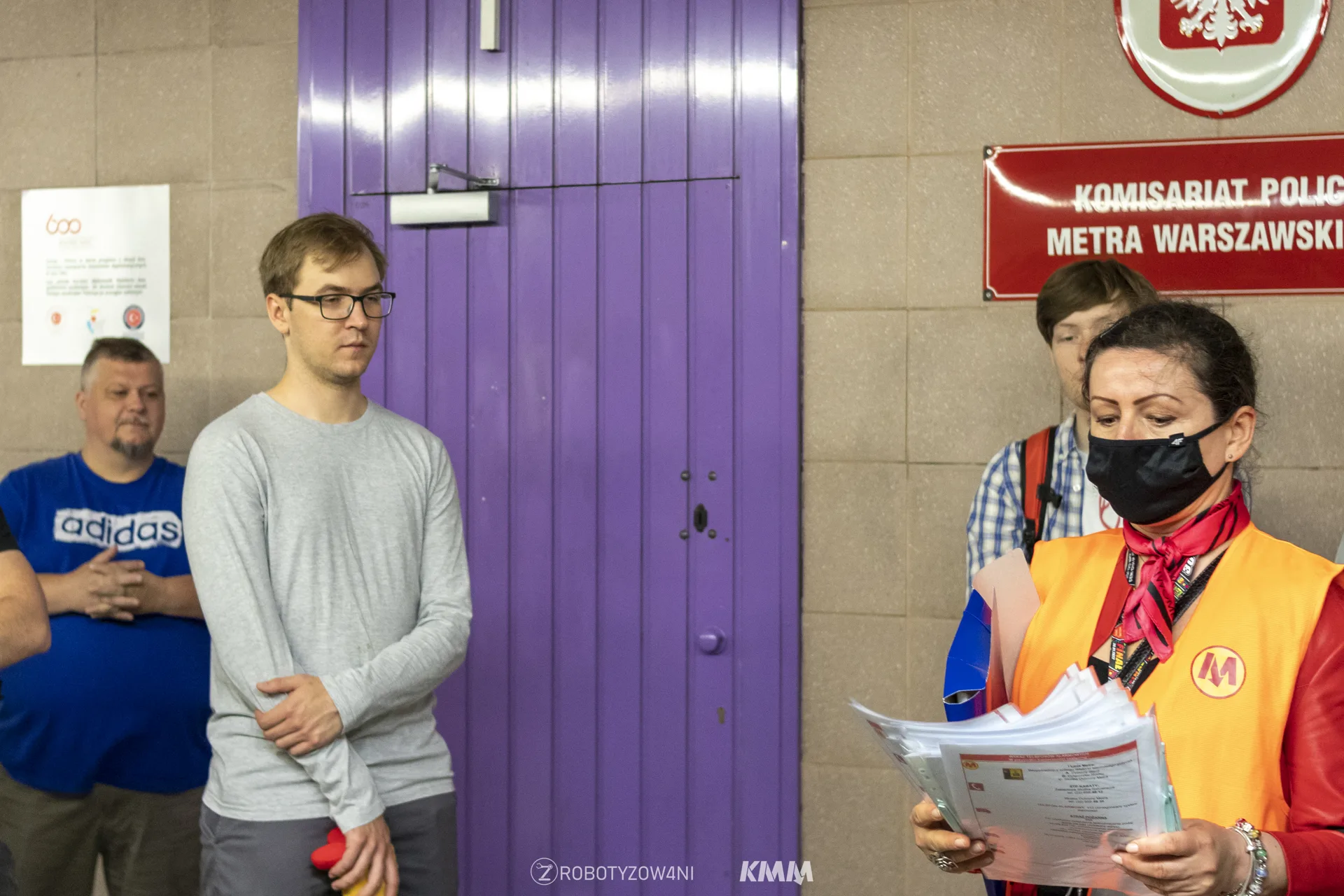
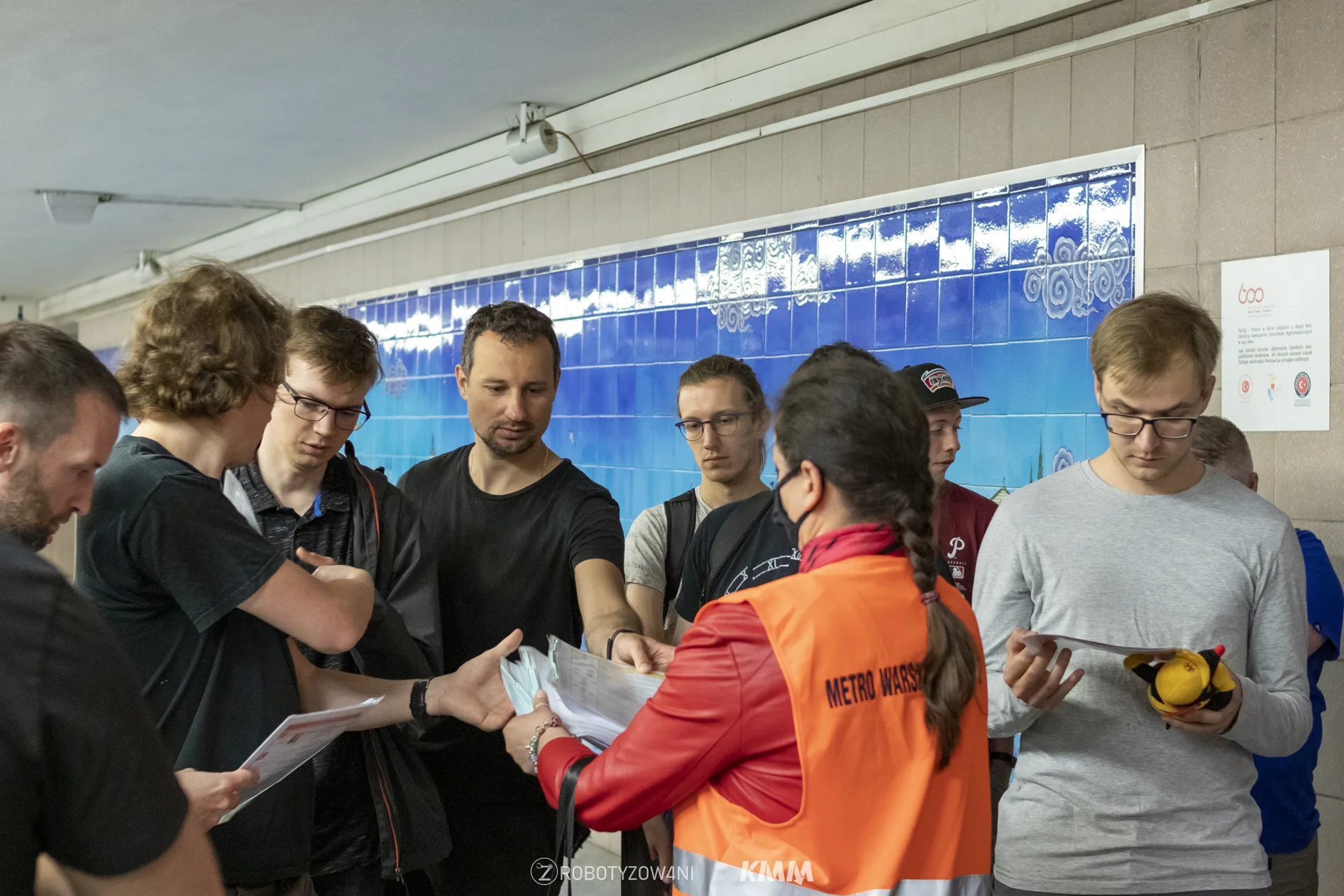
The highlight was the original 1993 mosaic control desk with a mimic diagram of the station supply, including the 15 kV ring marked towards A13 and A9.

The station’s lungs
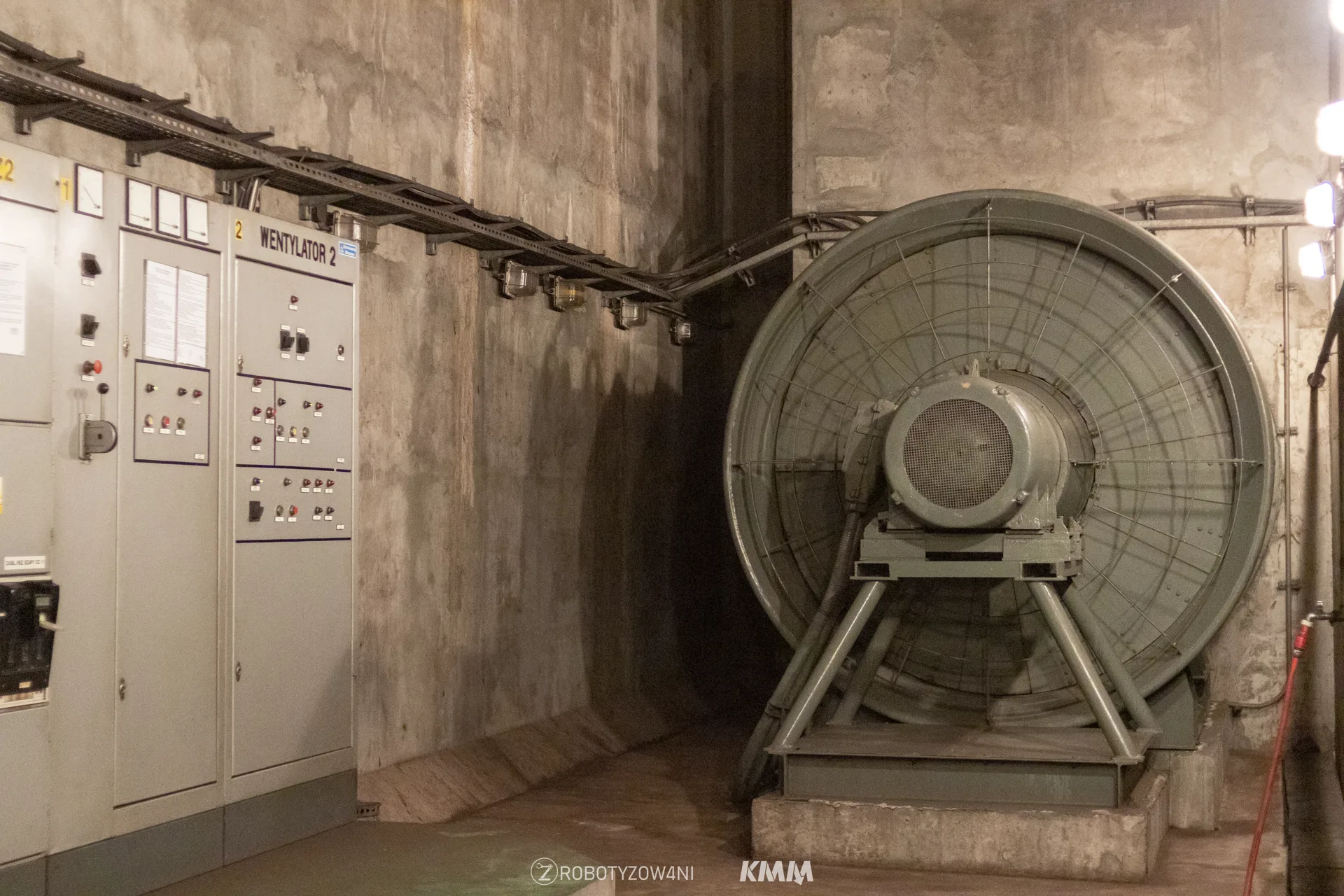
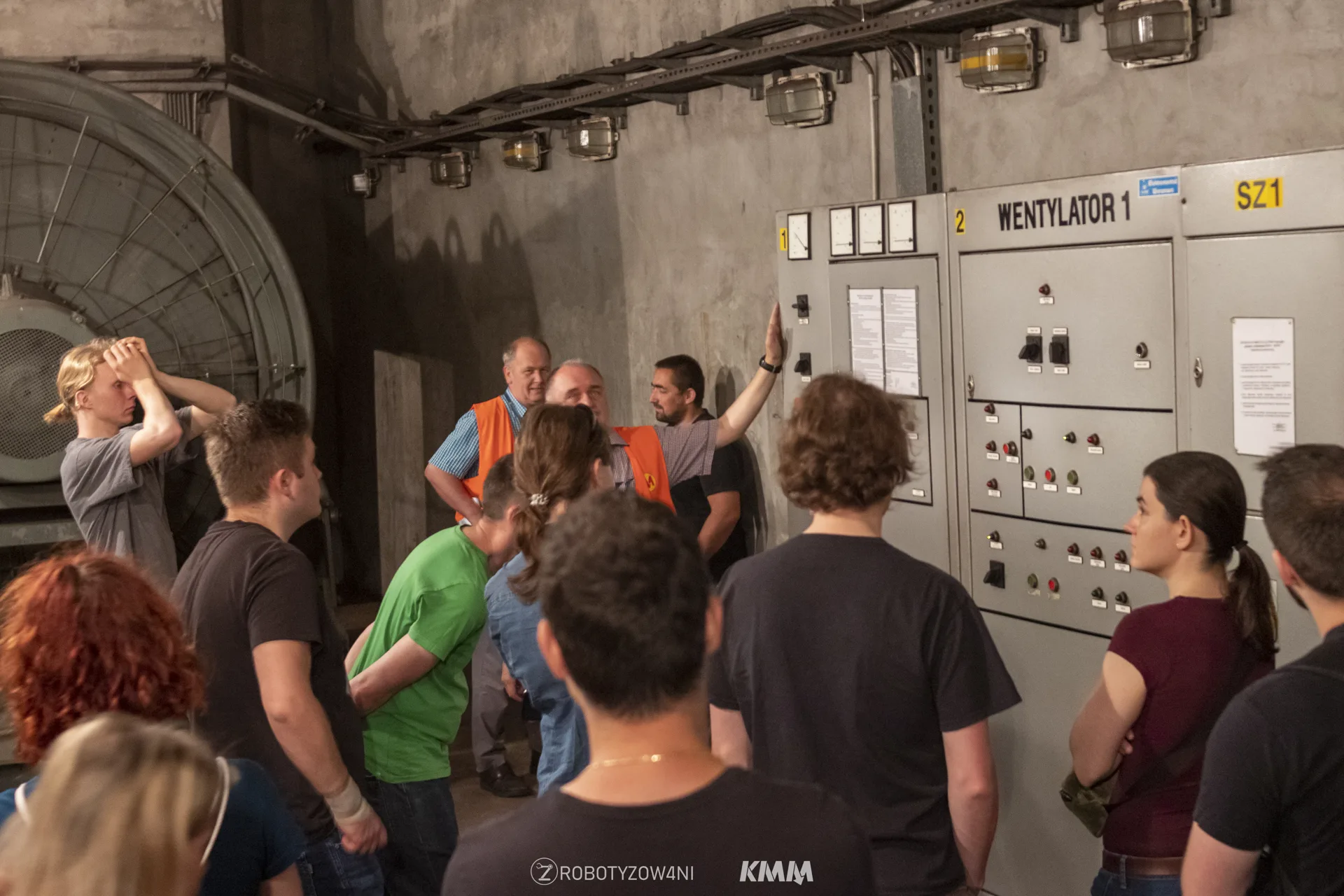
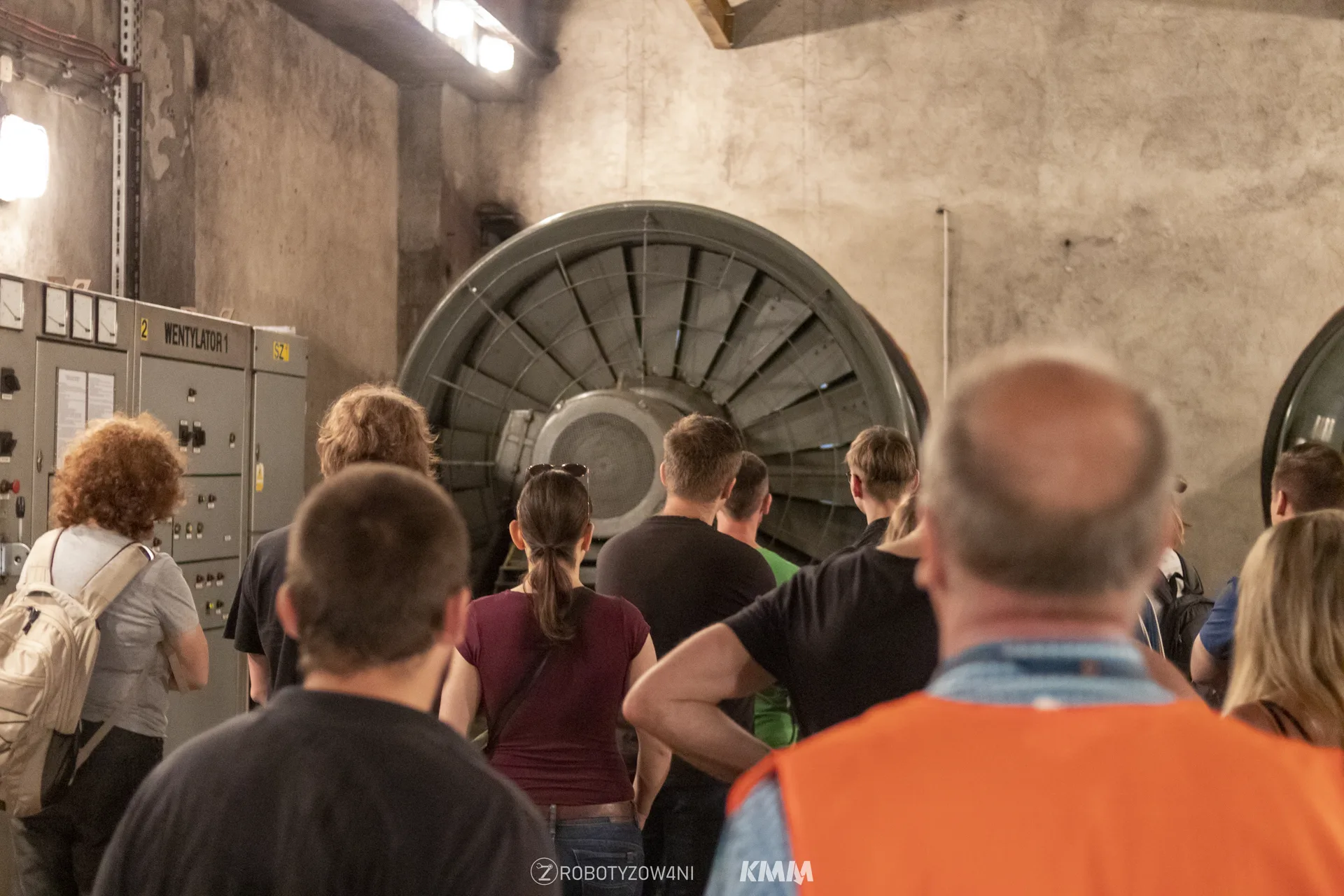
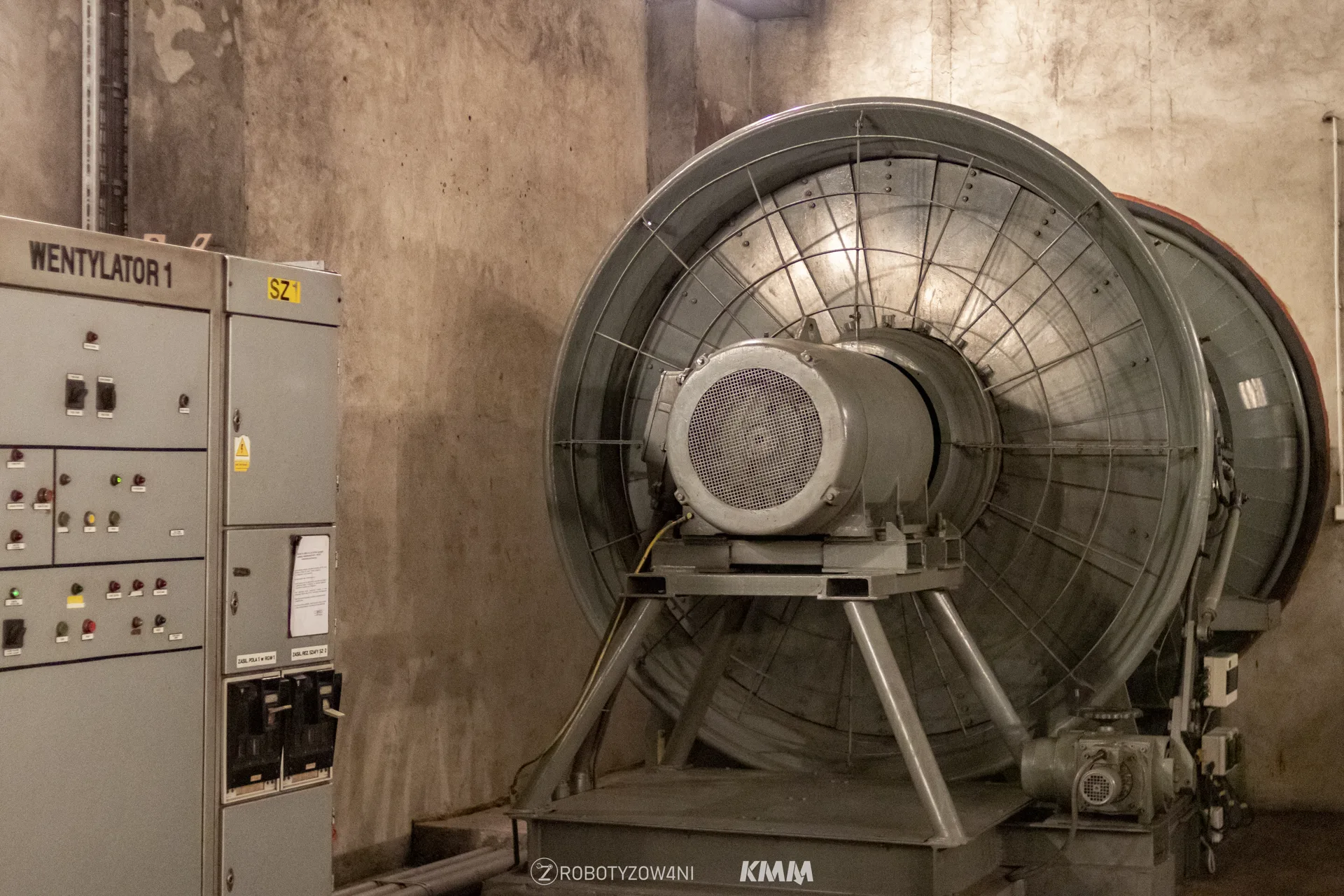
From the control room we went to the station fan room. From below we looked up the ventilation shaft built into the office block above the station, and in the chamber of the two fans that push air down it into the station, technical staff explained how station ventilation works.
On the way back through the subway the control-room operator showed us a device for checking whether the conductor rail is live and the protective equipment that keeps technical staff safe from electric shock.
With the station supervisor
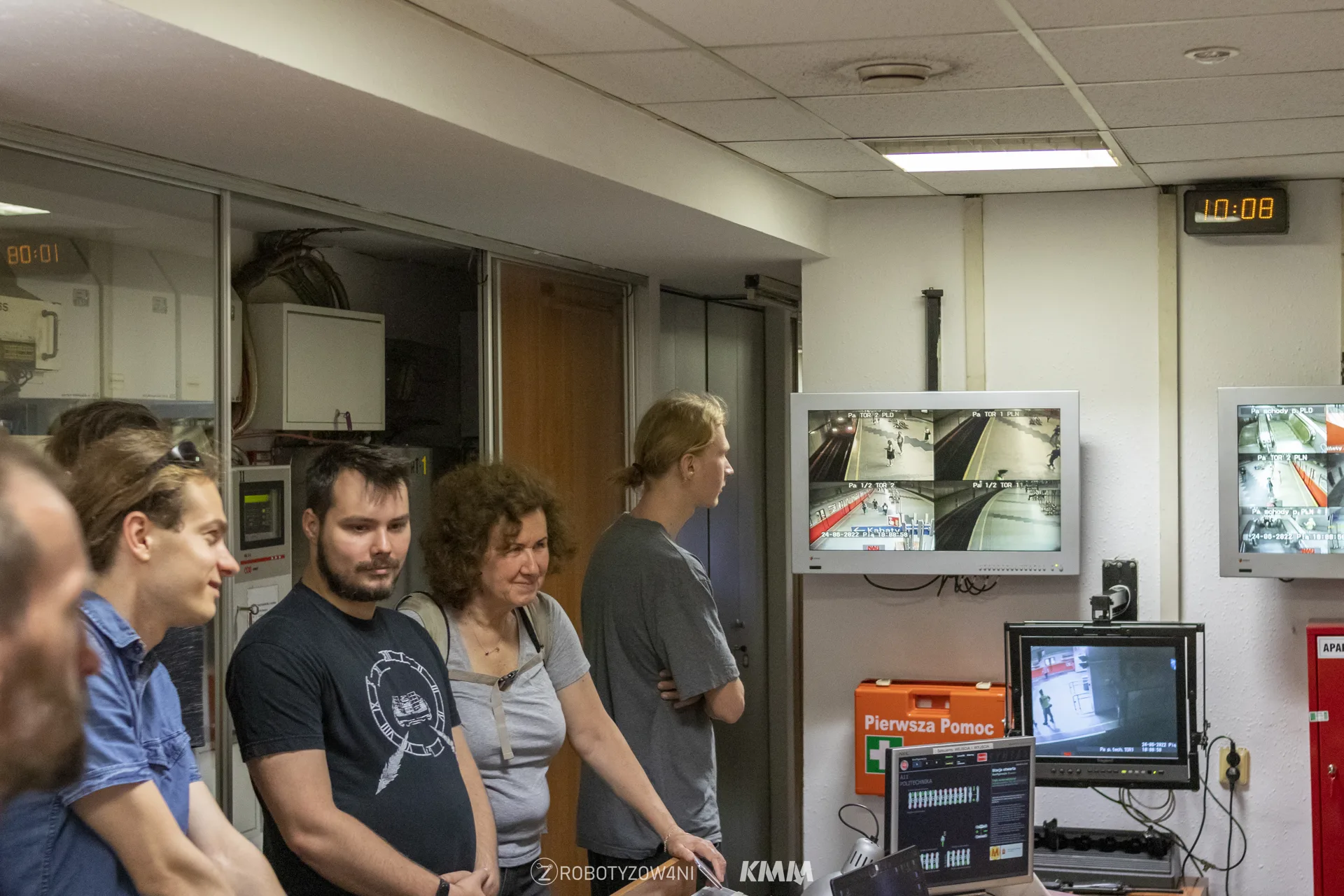
At the station supervisor’s post we learned what the job involves. The traffic control room has a large desk with several screens showing the track layout of the southern part of line M1.


Under Pole Mokotowskie
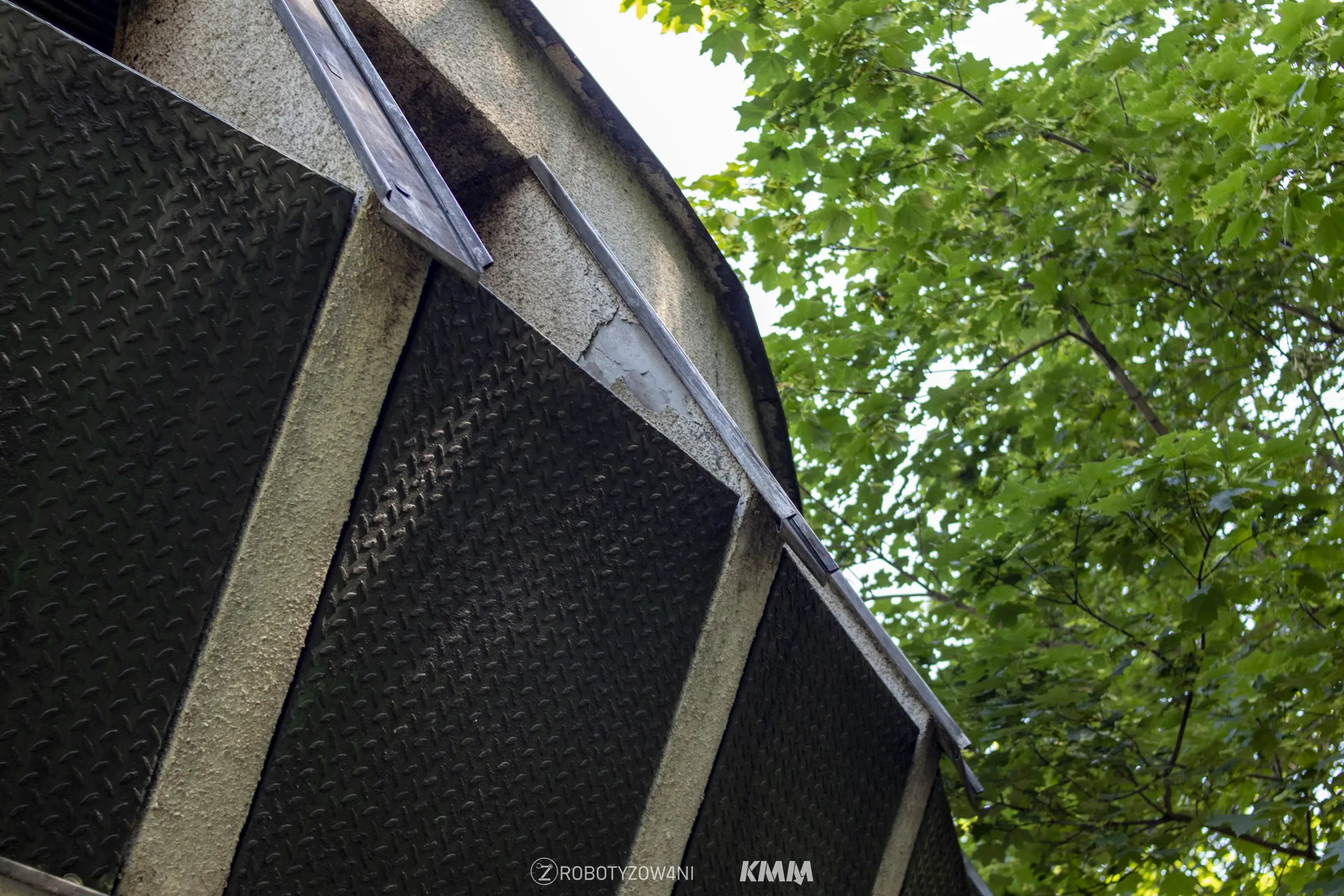
Through a tunnel under the Łazienkowska Route we walked to the building that once housed the metro’s central control room, and climbed a staircase to the surface just behind the Polish Cavalry Monument. Our next destination was the linked technical void and line ventilation building B11. You enter them through the famous “little reactor”, or “mushroom”: ventilation kiosk B11, a favourite Warsaw meeting point.
A shelter that was never finished
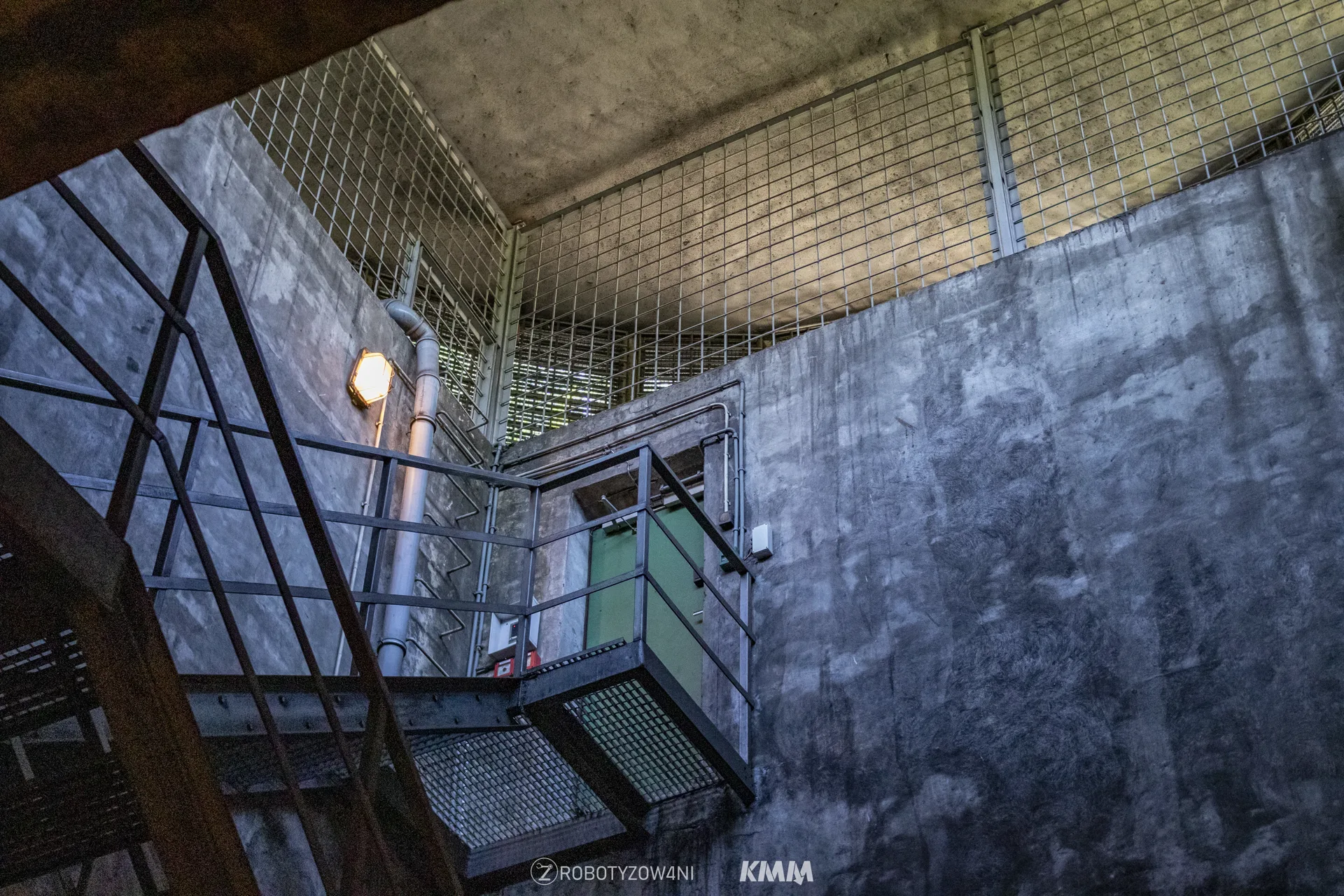
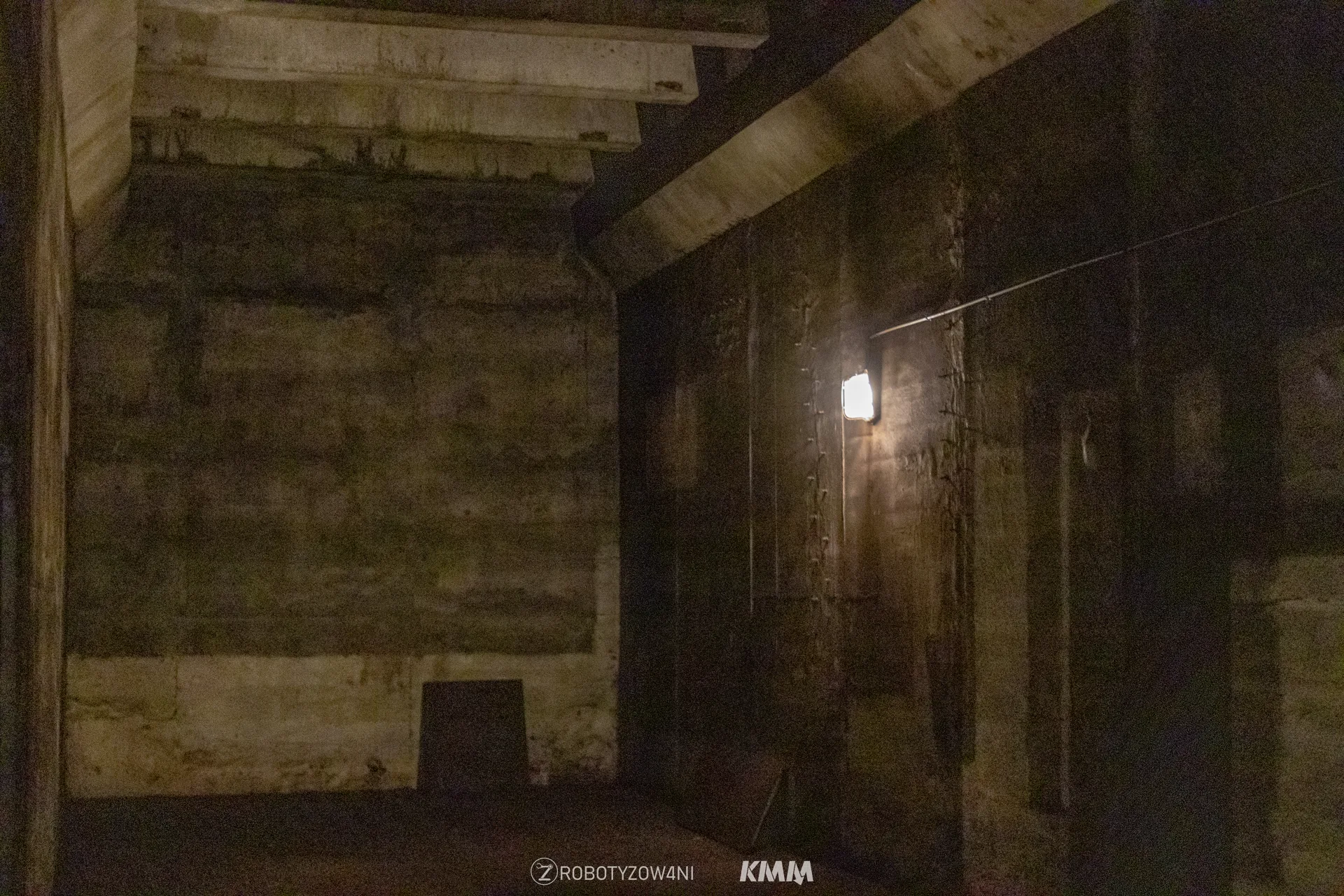
The technical void consists of huge rooms of about 2,000 m², whose existence people relaxing in the park are usually unaware of. Under plans from the 1980s it was to be a filter-ventilation plant in case the metro was used as a civil-defence shelter. It was to supply filtered air to 7 stations, from Racławicka to Dworzec Gdański, and consist of three halls: pre-filters, filter-absorbers and fans.
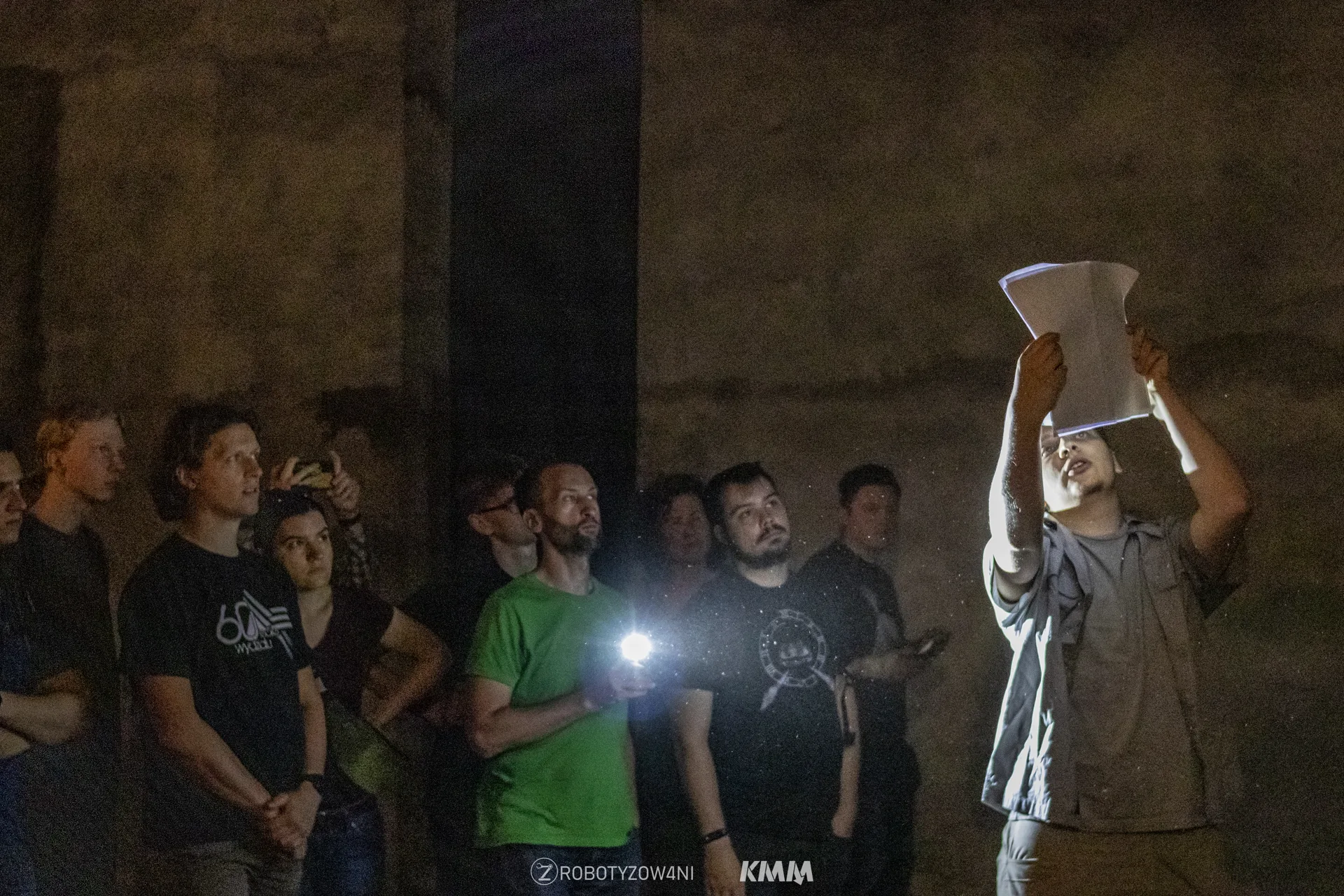
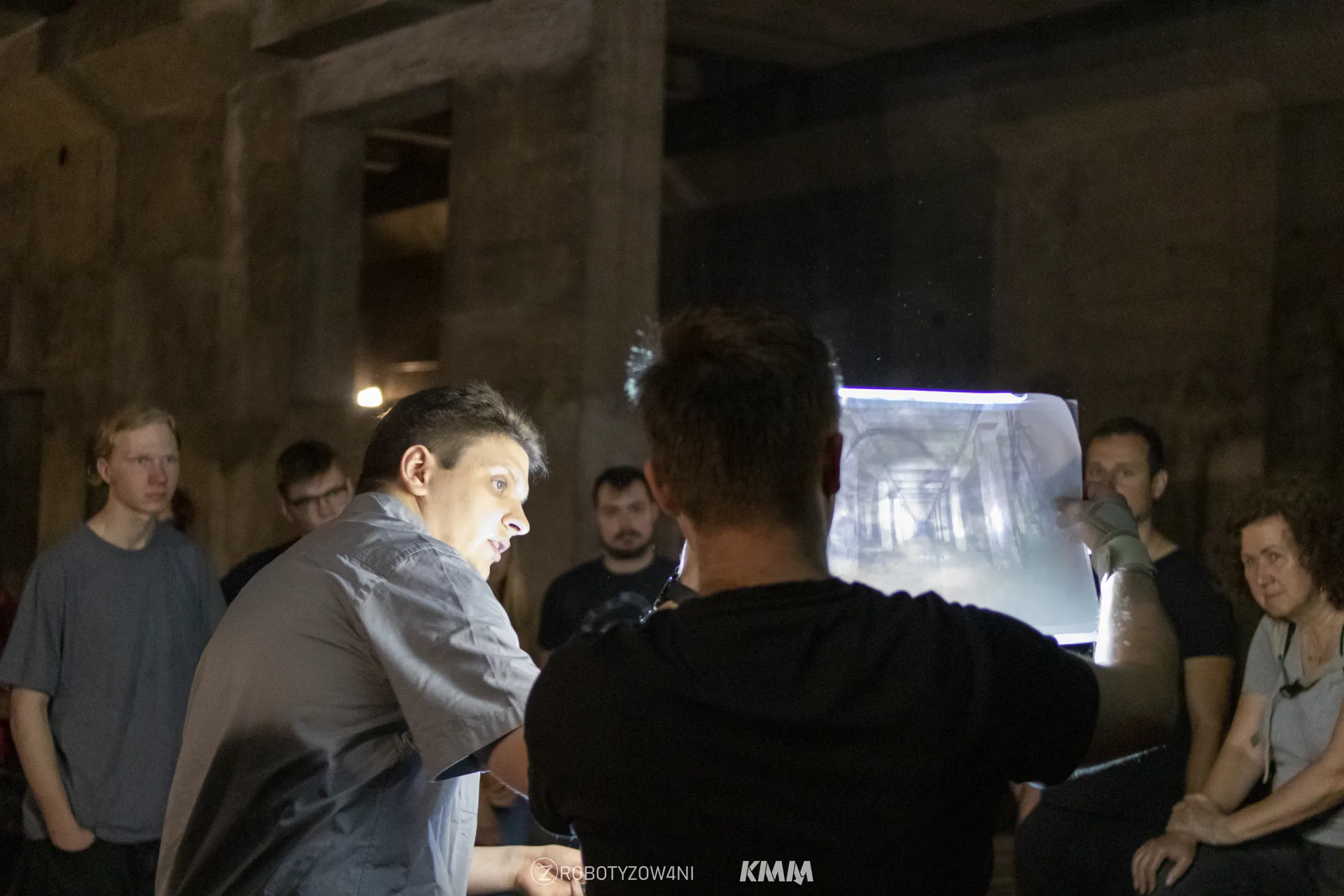
What remains of these plans are huge steel doors, blast- and gas-tight closures, separating the plant from the shaft to the surface. Once the effects of an explosion such as the shock wave had passed, they would open to draw air into the filters. A fellow Circle member told us about the plant and showed photos by the urban explorer SamNamos (Instagram: time2urbex) of completed facilities of this kind in cities of the former USSR.
A parting gust
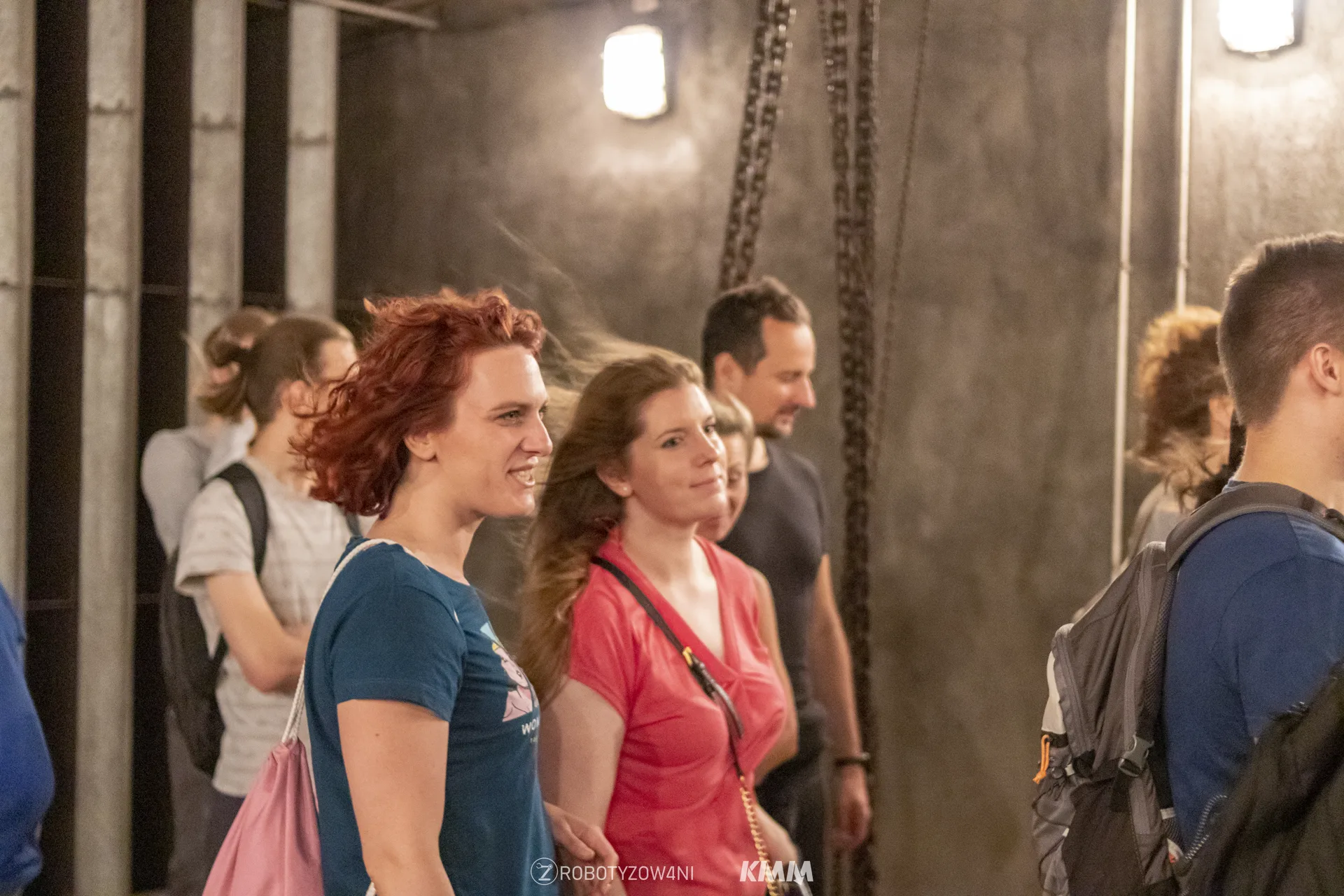
Through an airlock with shelter doors we went into line ventilation building B11. Finally one of the fans was switched on, and we felt the strong blast of the machines that supply fresh air to the tunnels and stations every day.

We thank Metro Warszawskie for opening these places to us and for patiently explaining how such a complex system as the Warsaw Metro works.
At a glance
| Date | 25 June 2022 |
| Series | “See how the metro breathes underground”, tour no. 2 |
| Organisers | Koło Miłośników Metra and Zrobotyzowani, patronage: Metro Warszawskie |
| Route | power control room and fan room of station A11 Politechnika, station supervisor, former central control room, technical void and ventilation building B11 |
| Mosaic desk | original, from 1993 |
| Filter-ventilation plant | approx. 2,000 m², unfinished, intended for 7 stations from Racławicka to Dworzec Gdański |
Frequently asked questions
What is under the “mushroom” on Pole Mokotowskie?
Ventilation kiosk B11 leads to a metro line ventilation building and the linked technical void, an unfinished filter-ventilation plant from the 1980s.
What was the filter-ventilation plant under Pole Mokotowskie for?
It was to supply filtered air to 7 metro stations, from Racławicka to Dworzec Gdański, if the metro were used as a civil-defence shelter, with halls for pre-filters, filter-absorbers and fans.
How large is the technical void under Pole Mokotowskie?
About 2,000 m². Steel blast- and gas-tight closures separating it from the shaft to the surface survive there.
What does the supervisor’s desk at Politechnika station show?
Several screens with the track layout of the southern part of line M1.
Trip report originally published on the website of the Metro Enthusiasts’ Circle (Koło Miłośników Metra) (10 July 2022). Text rewritten and translated by the Zrobotyzowani editorial team. Original Polish report on kmmetra.pl. Photos: Zrobotyzowani / Koło Miłośników Metra.