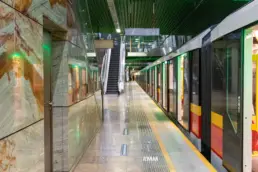
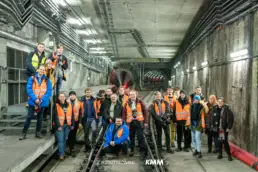
Date: 24 October 2022 · Location: Warsaw Metro, stations A18 Plac Wilsona, A19 Marymont and A23 Młociny · Organisers: Koło Miłośników Metra (Metro Enthusiasts’ Circle) and Zrobotyzowani
Behind an ordinary door in the underpass at Plac Wilsona a different metro begins. On 24 October 2022 a group from the Metro Enthusiasts’ Circle (KMM) and Zrobotyzowani went through it into ventilation plants, an unfinished car park and a station supervisor’s post. It was the third tour in the series “See how the metro breathes underground” and the last one on line M1.
Starting at Plac Wilsona: the station ventilation plant
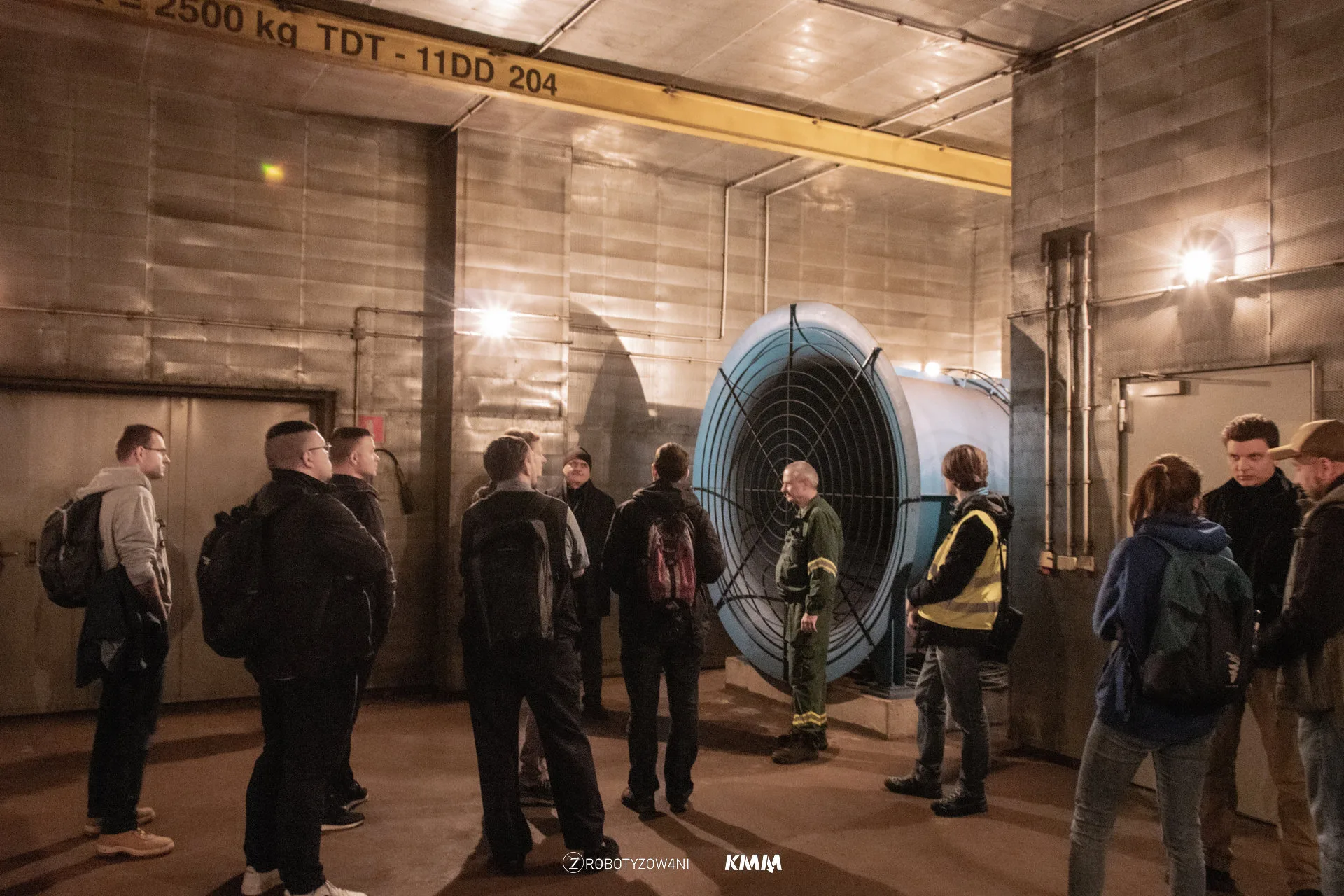
We met at the northern end of A18 Plac Wilsona station. After a short safety briefing we crossed to the other end of the underpass without going up to street level and passed through a technical room into the station ventilation plant. The tour ran under the patronage of Metro Warszawskie, the Warsaw metro operator, and its staff explained how the ventilation system works in different seasons.
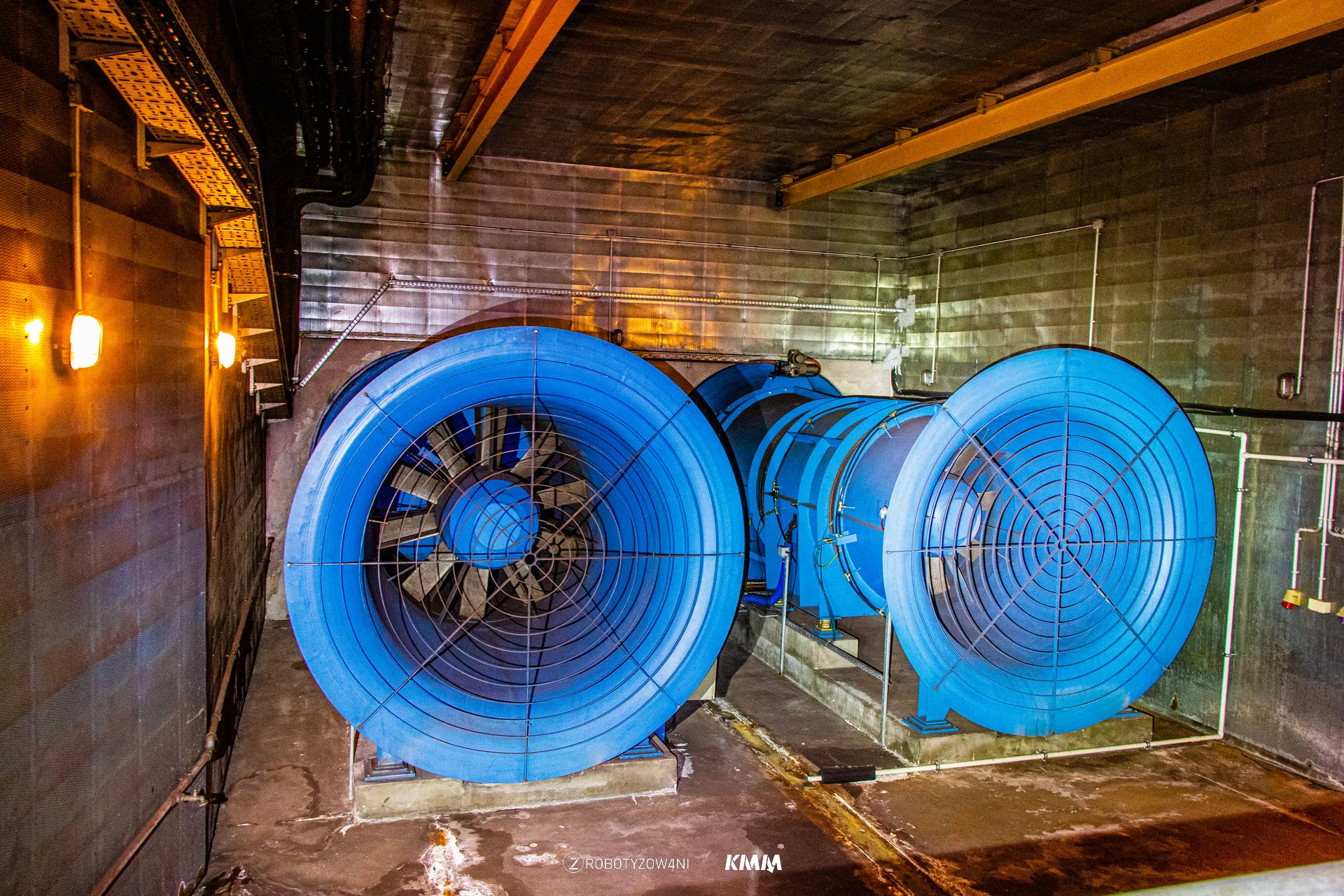
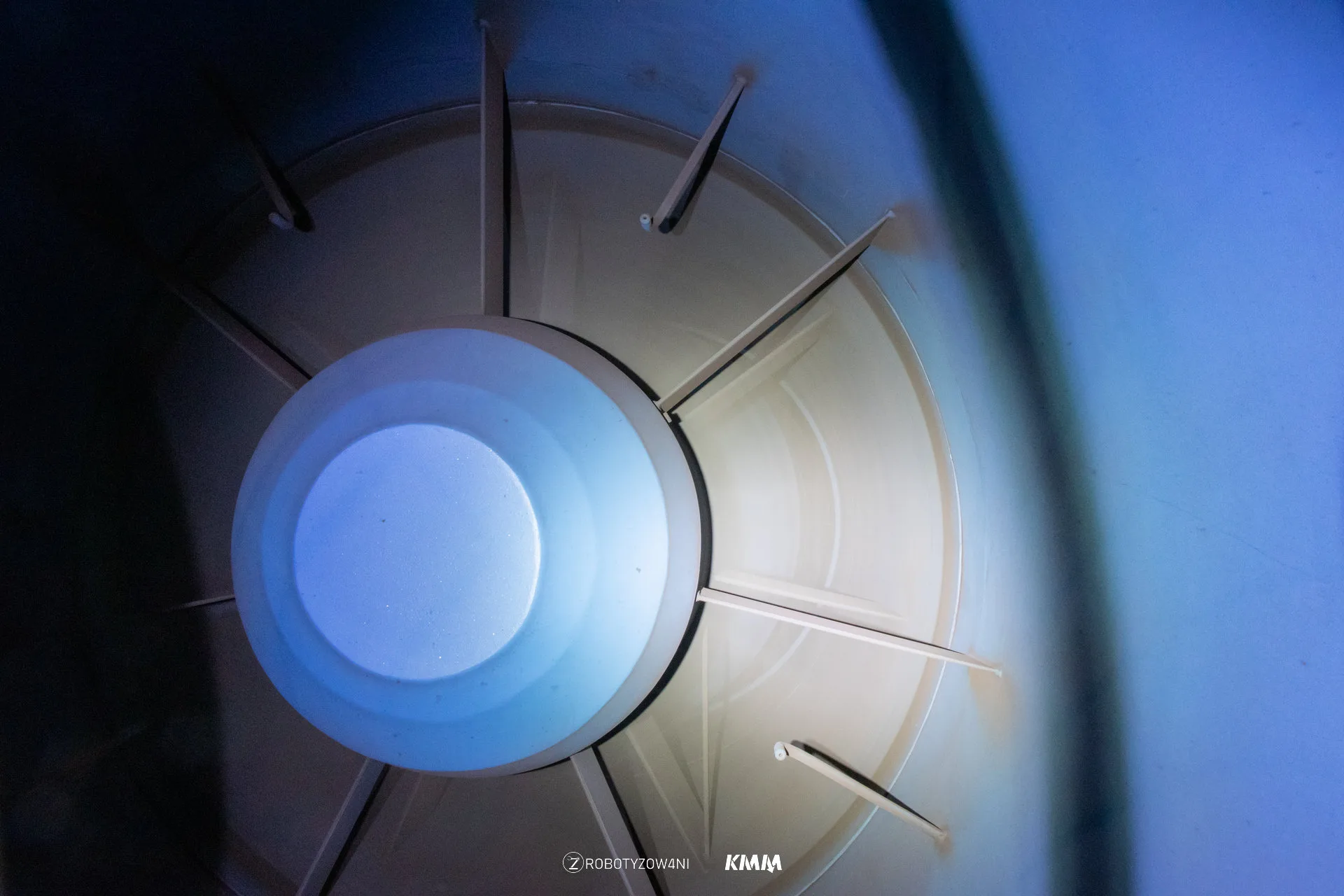
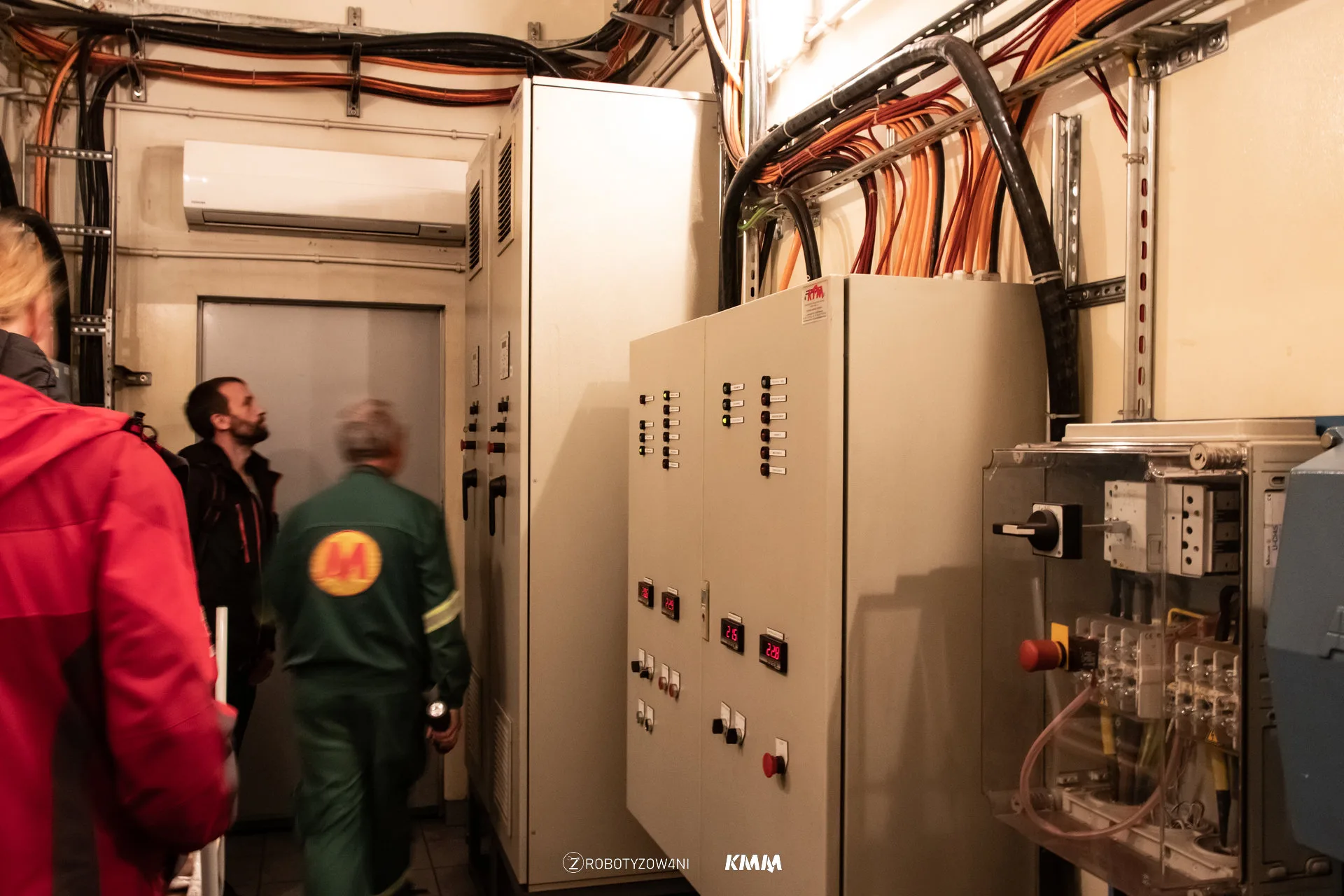
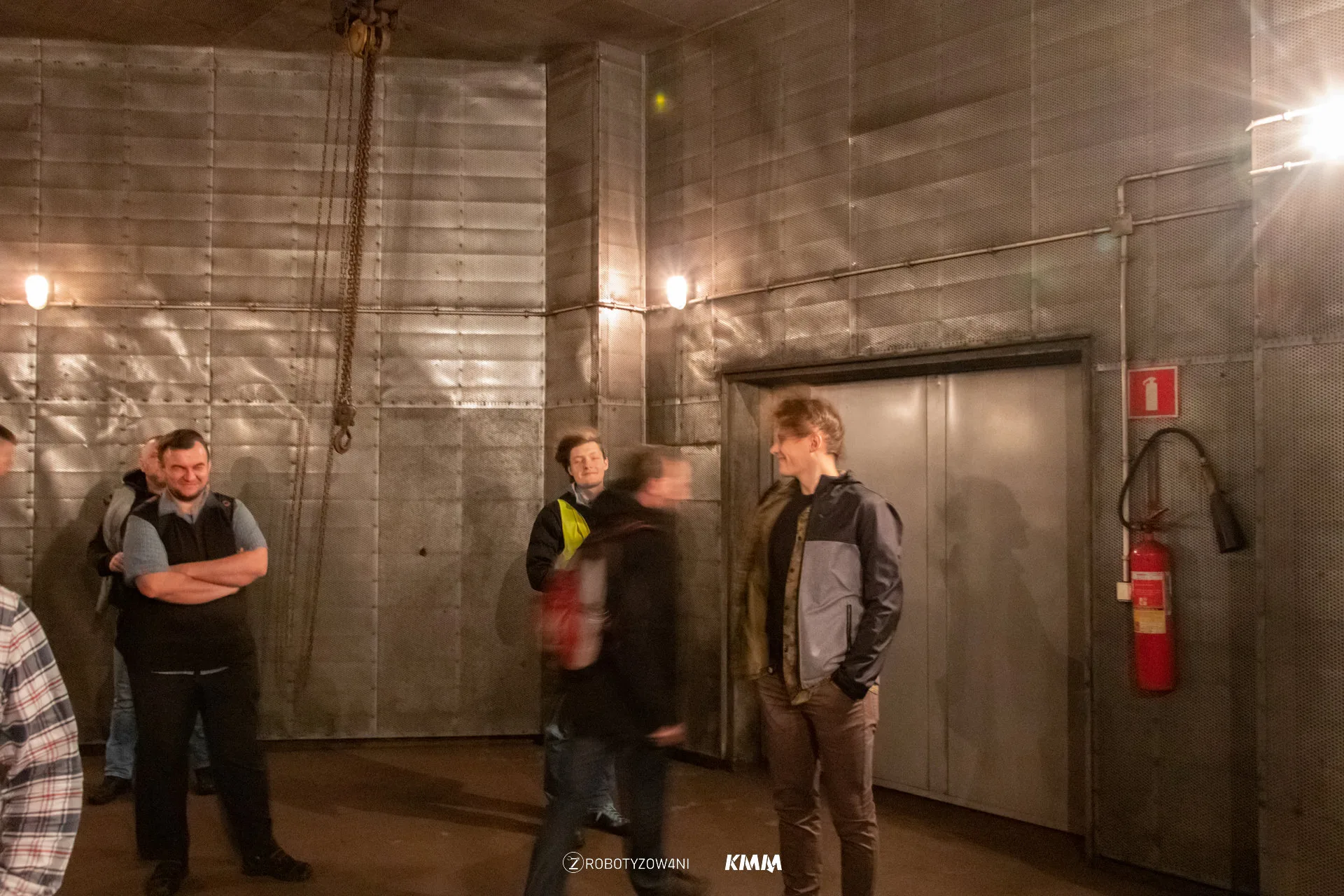
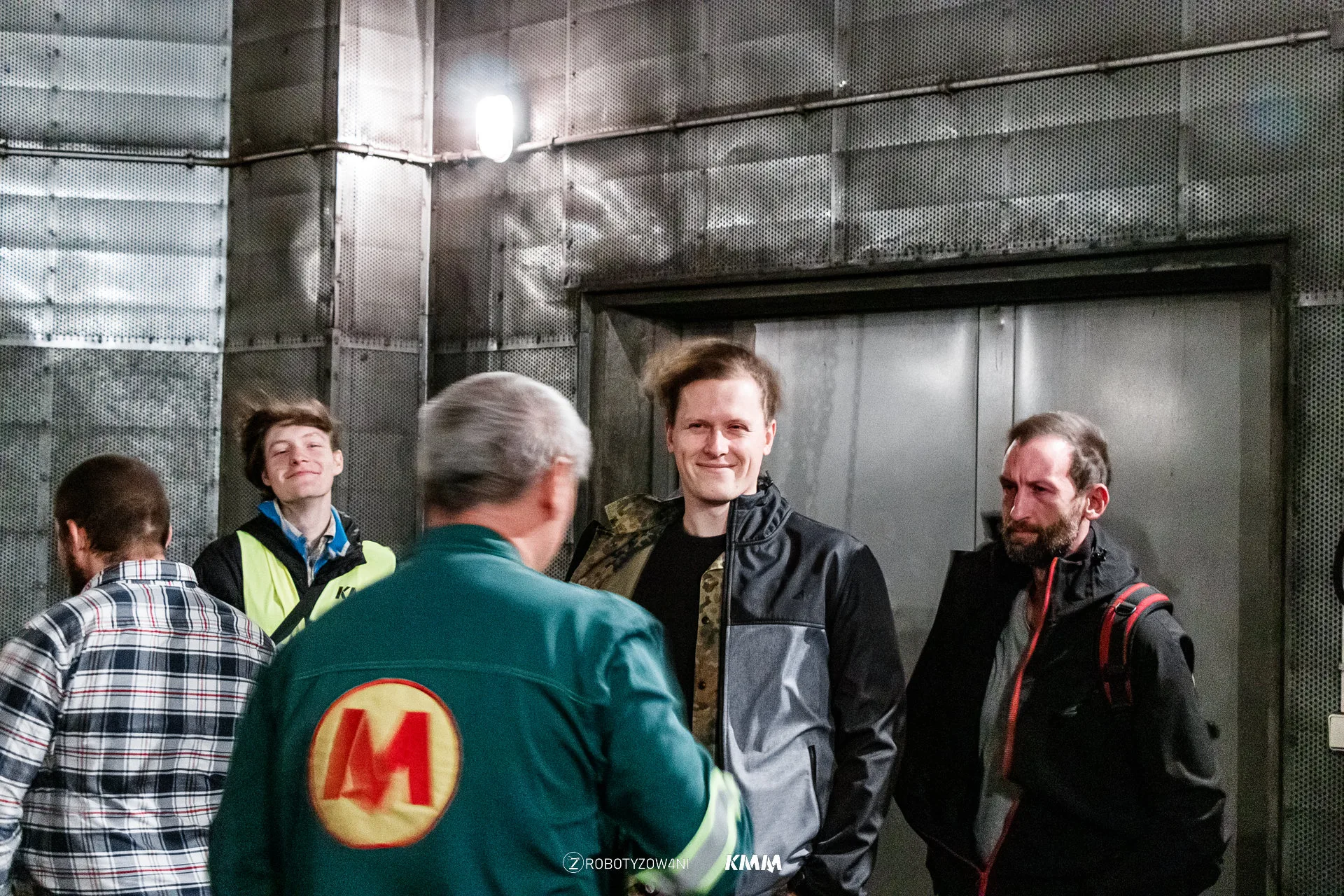
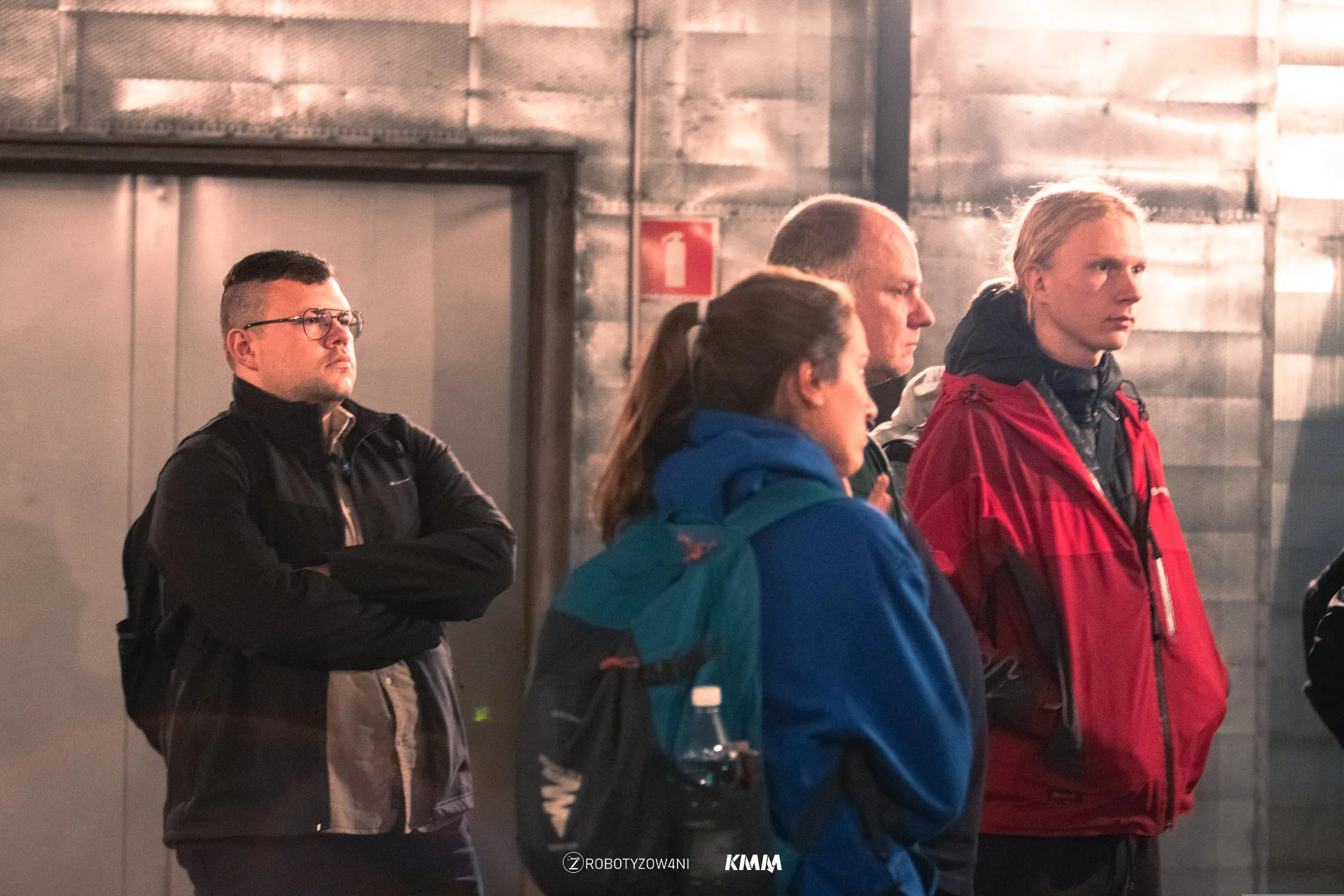
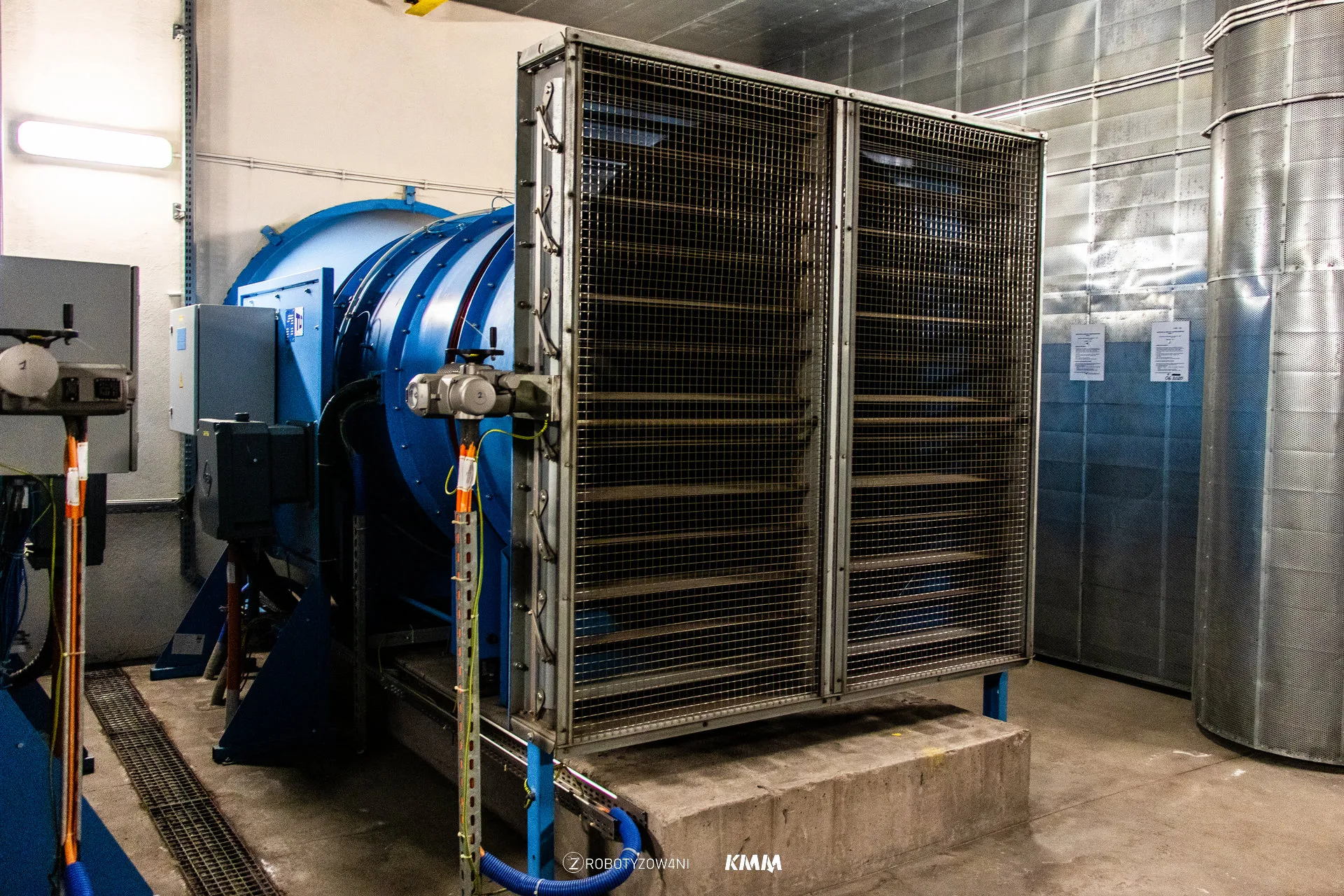
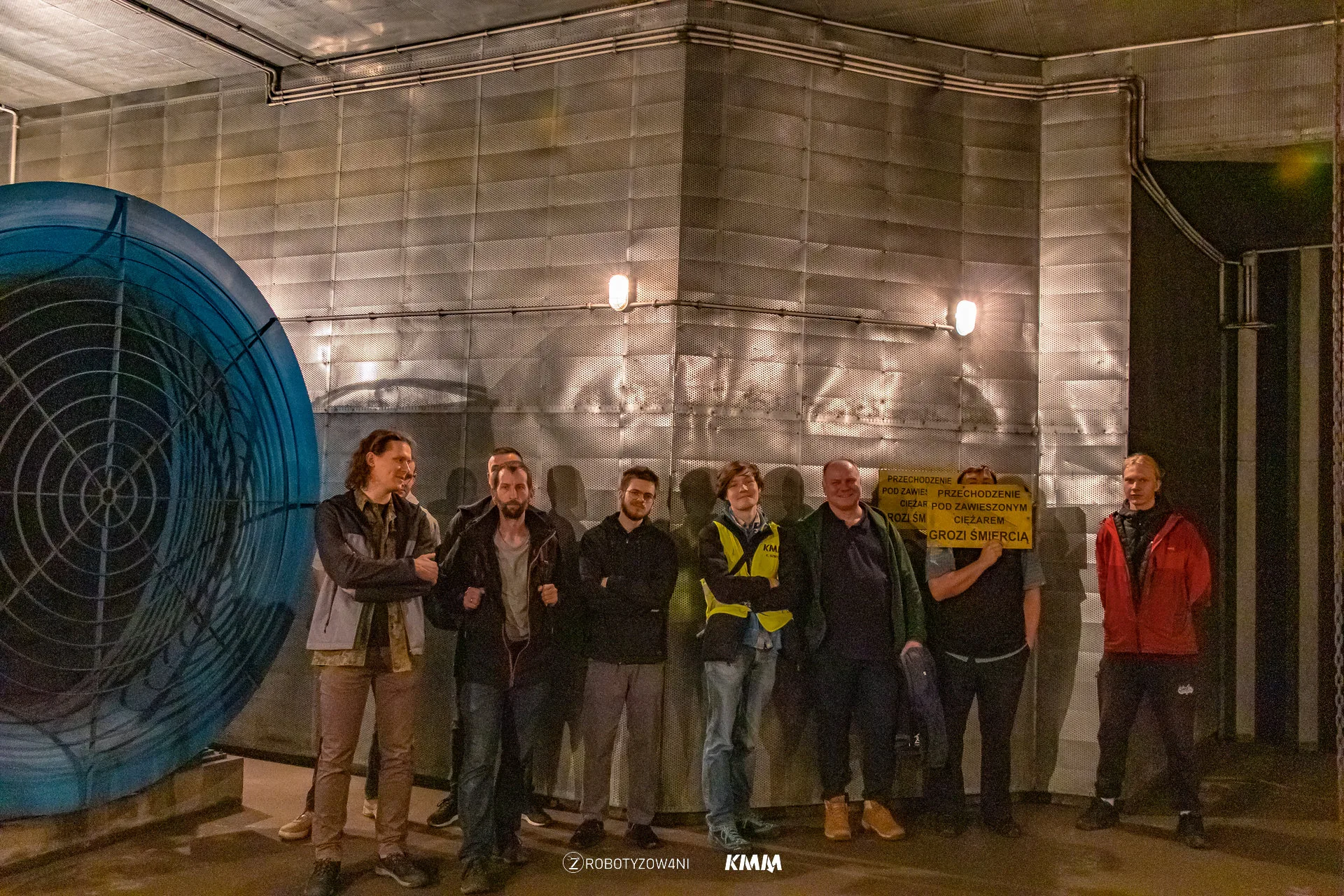
This chamber extracts air from the station using two Czech-made fans. The first thing everyone noticed was the heat. Dressed for autumn, the group quickly understood what the platforms would feel like if nobody exchanged the air.
The car park that never opened: the void under Słowackiego Street
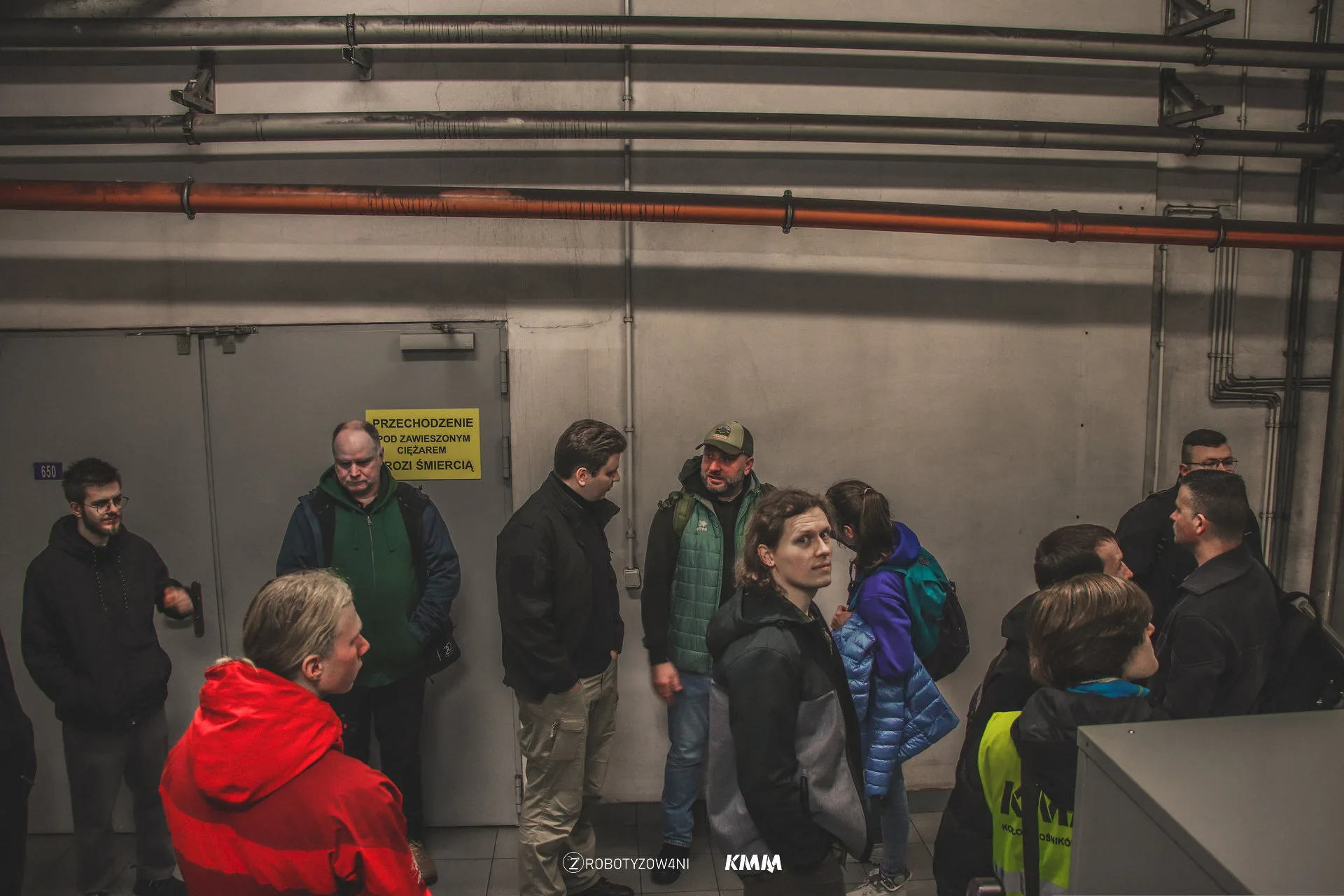
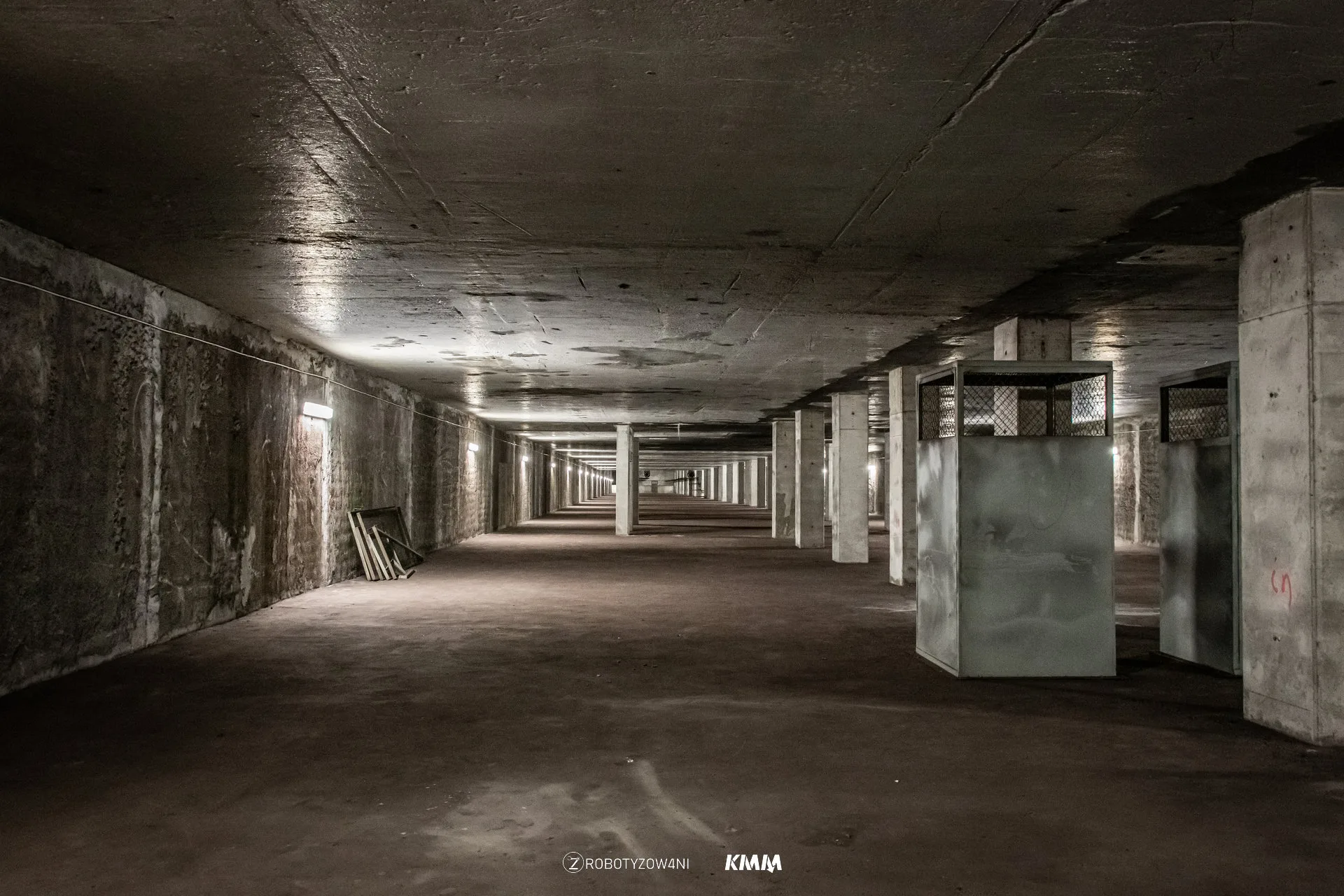
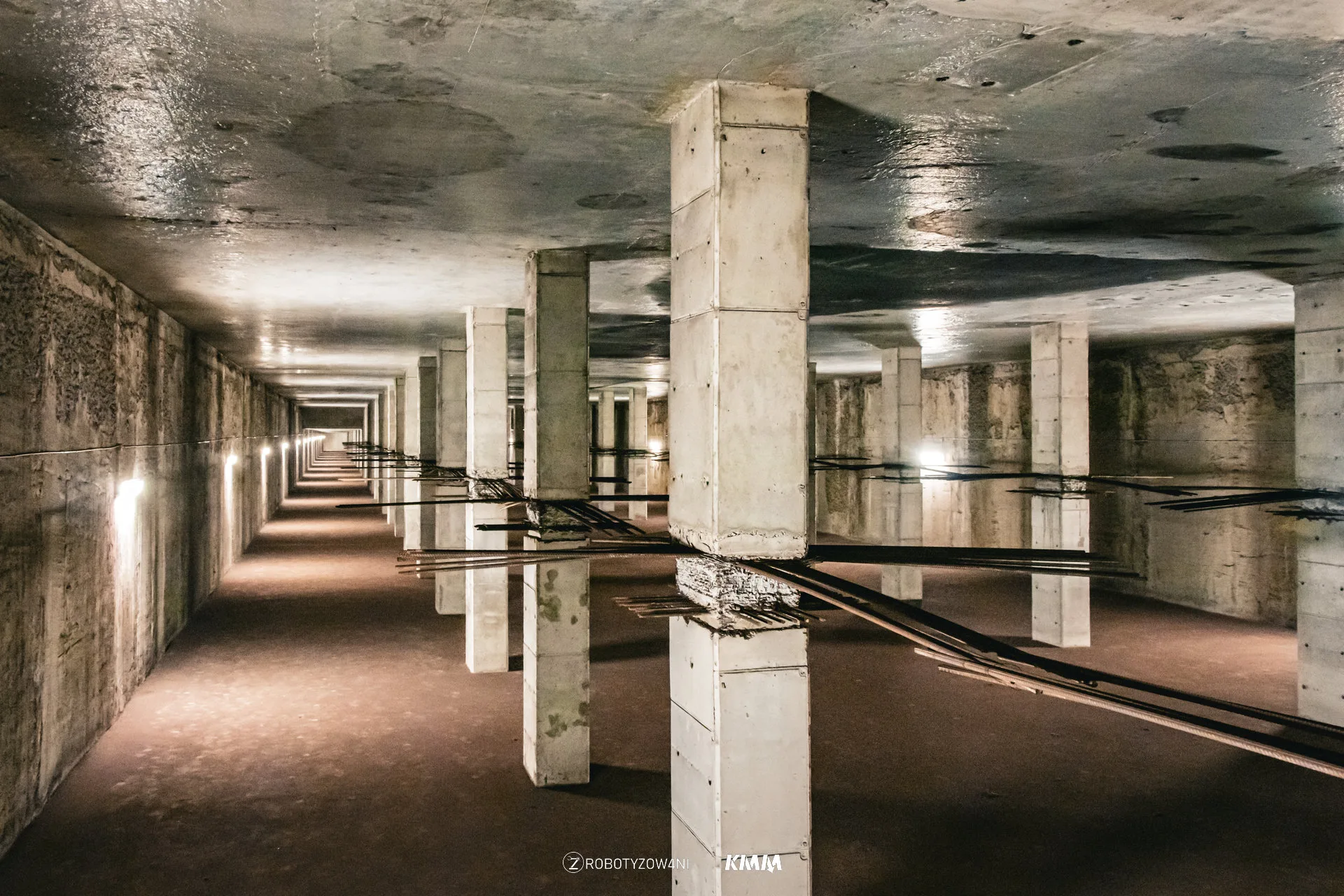
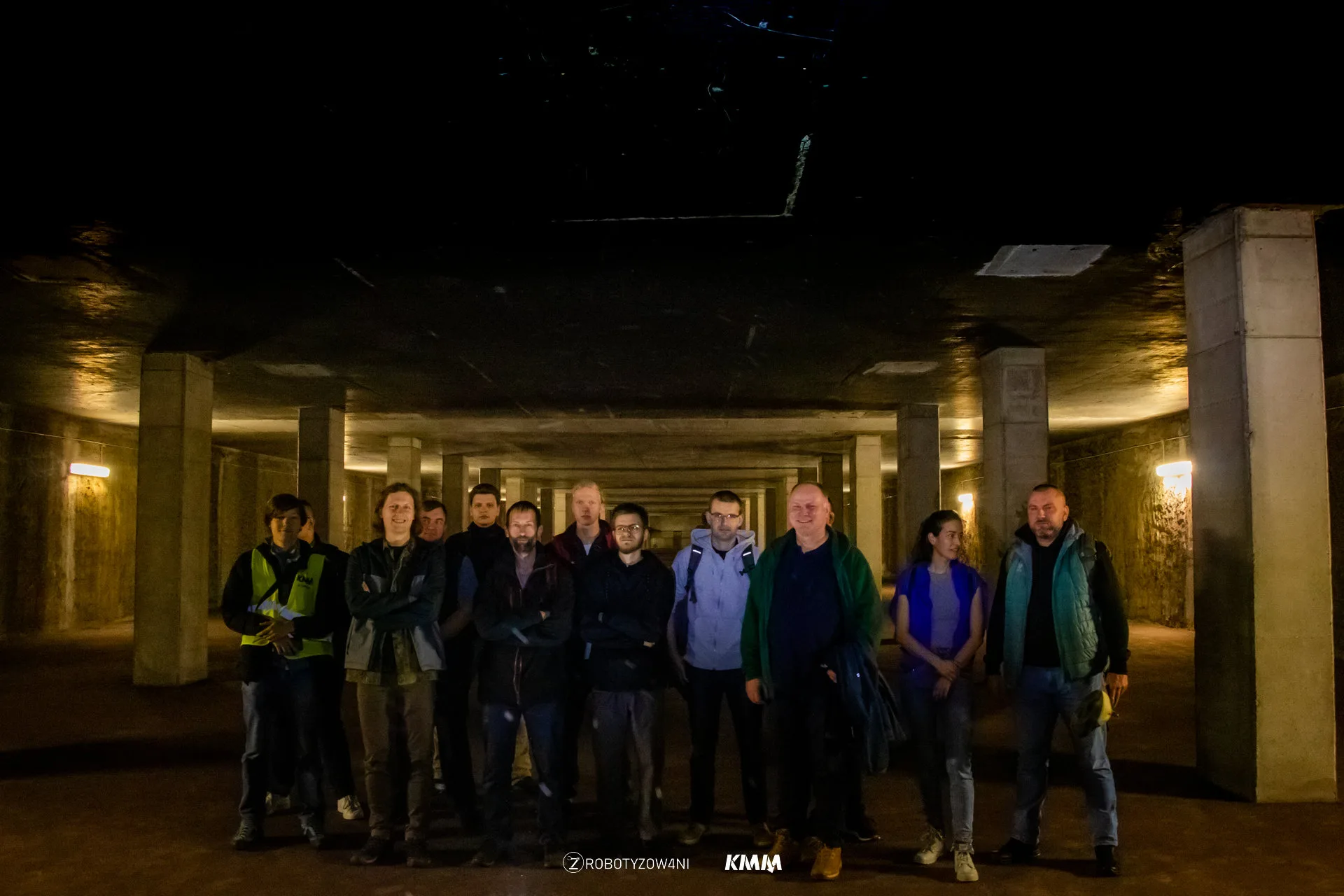
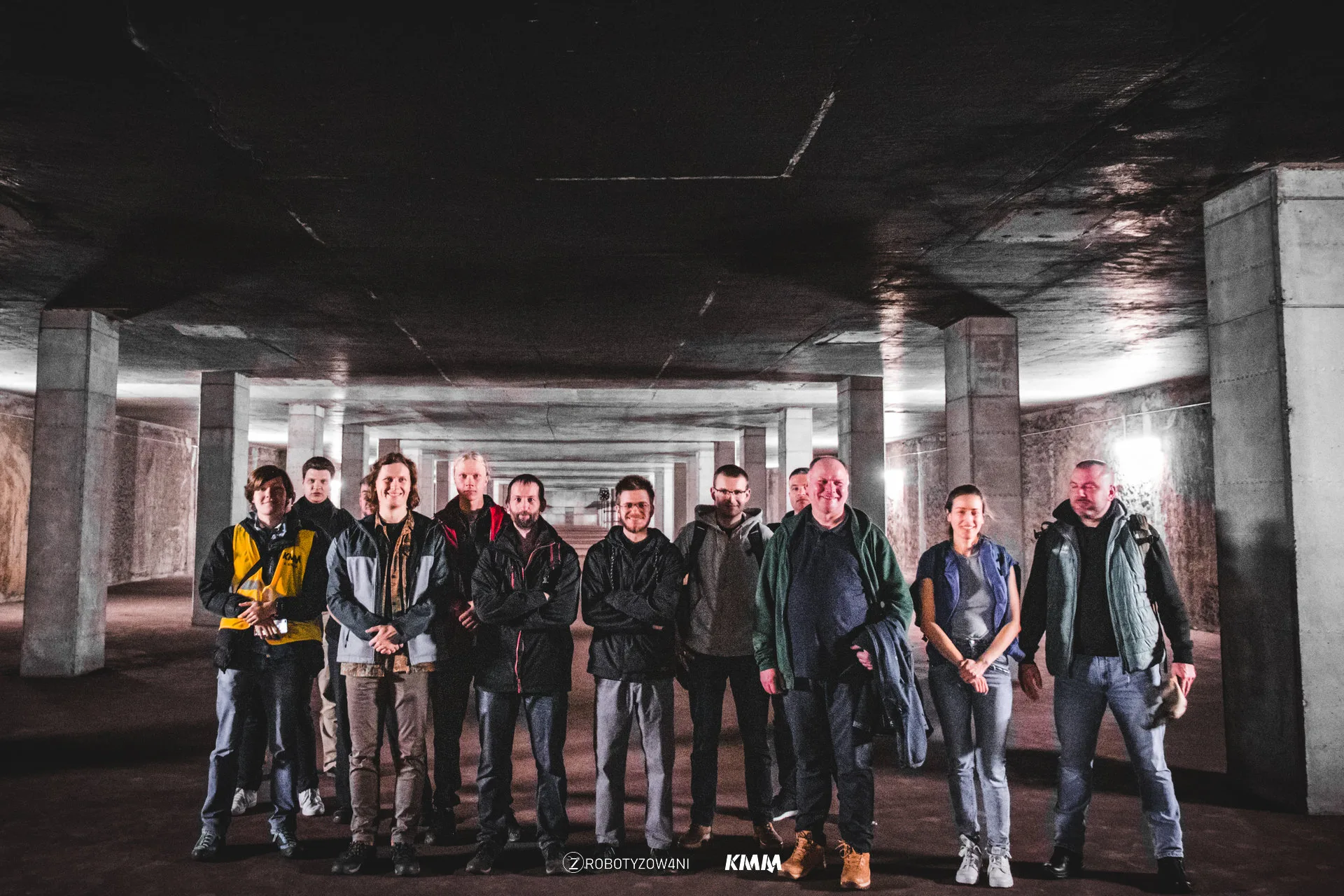
Another door from the same chamber leads to a place many Varsovians have heard of. It is a technical void above the stabling sidings beyond Plac Wilsona station, under Słowackiego Street. It was meant to be an underground car park, but in 2005 no vehicle access could be built, and it has stayed empty ever since.
Up close it is clearly no storeroom. It could hold more than 100 cars. Today it is a long, empty hall with rows of columns.
Five “huts” on Krechowiecka Street
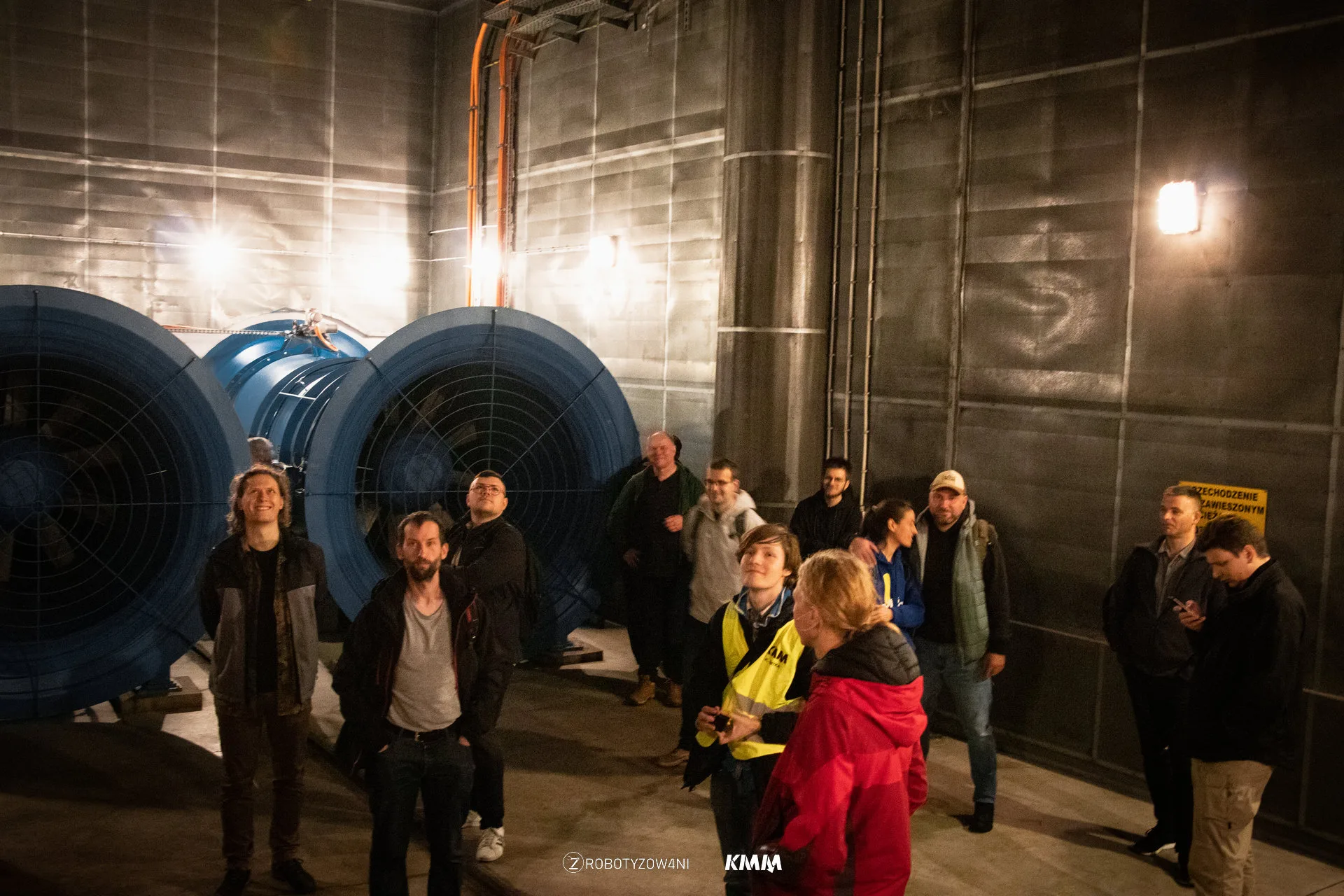
At the far end of the void there is another ventilation plant. Residents of Żoliborz know it from the outside without realising it: five small kiosks with grilles on Krechowiecka Street. They are air intakes. An intake duct carries the air to two fans of the same type as in the station chamber.
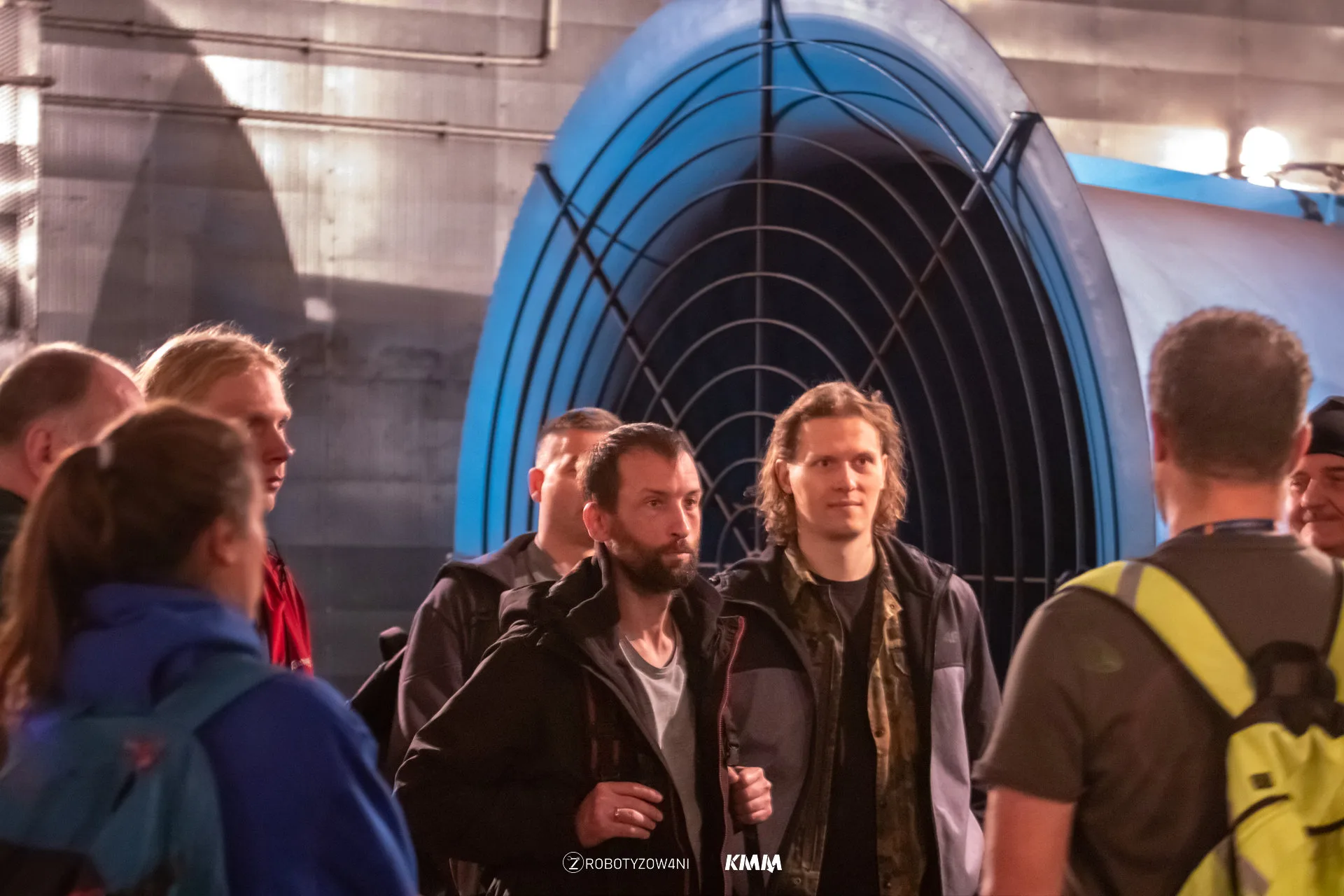
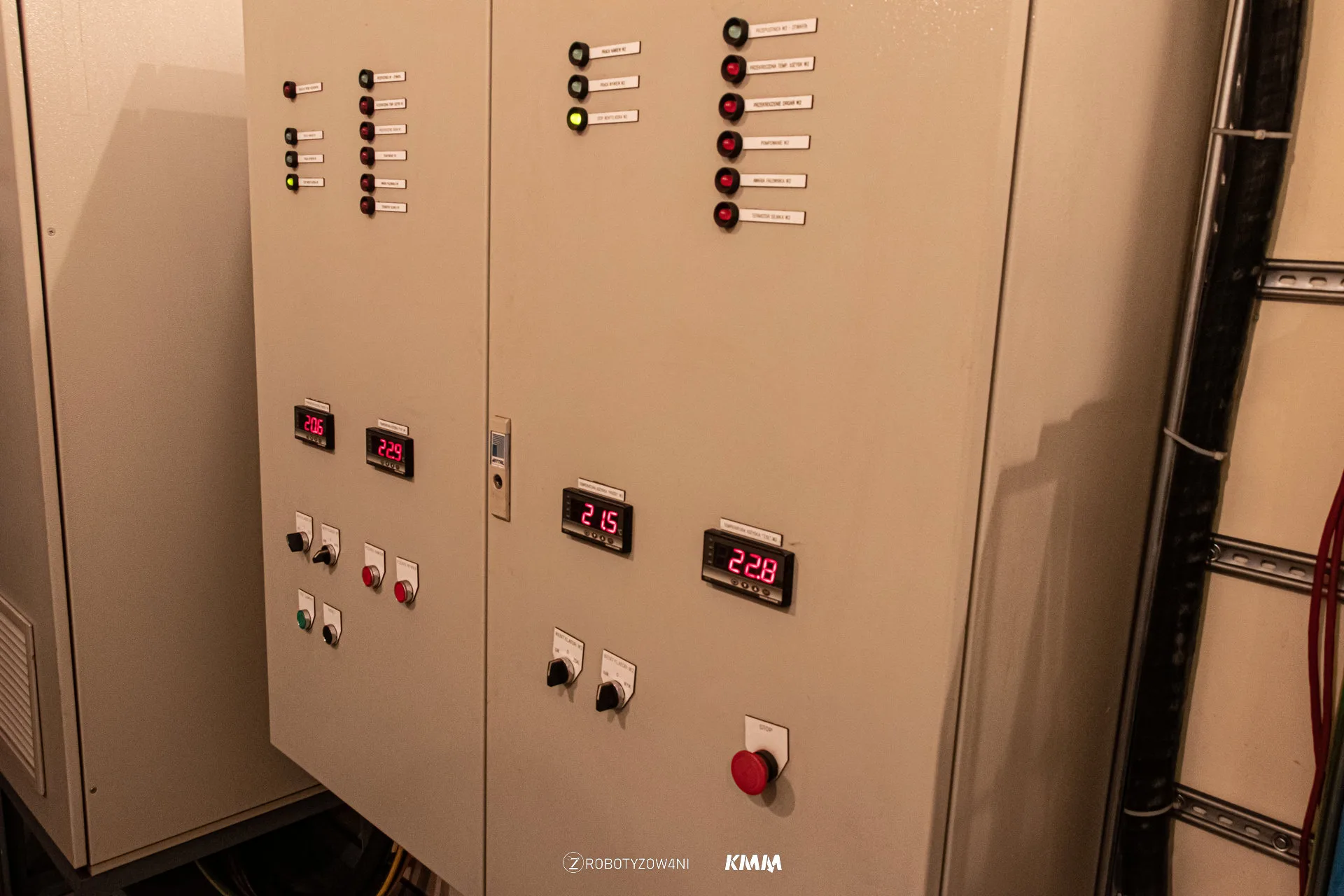
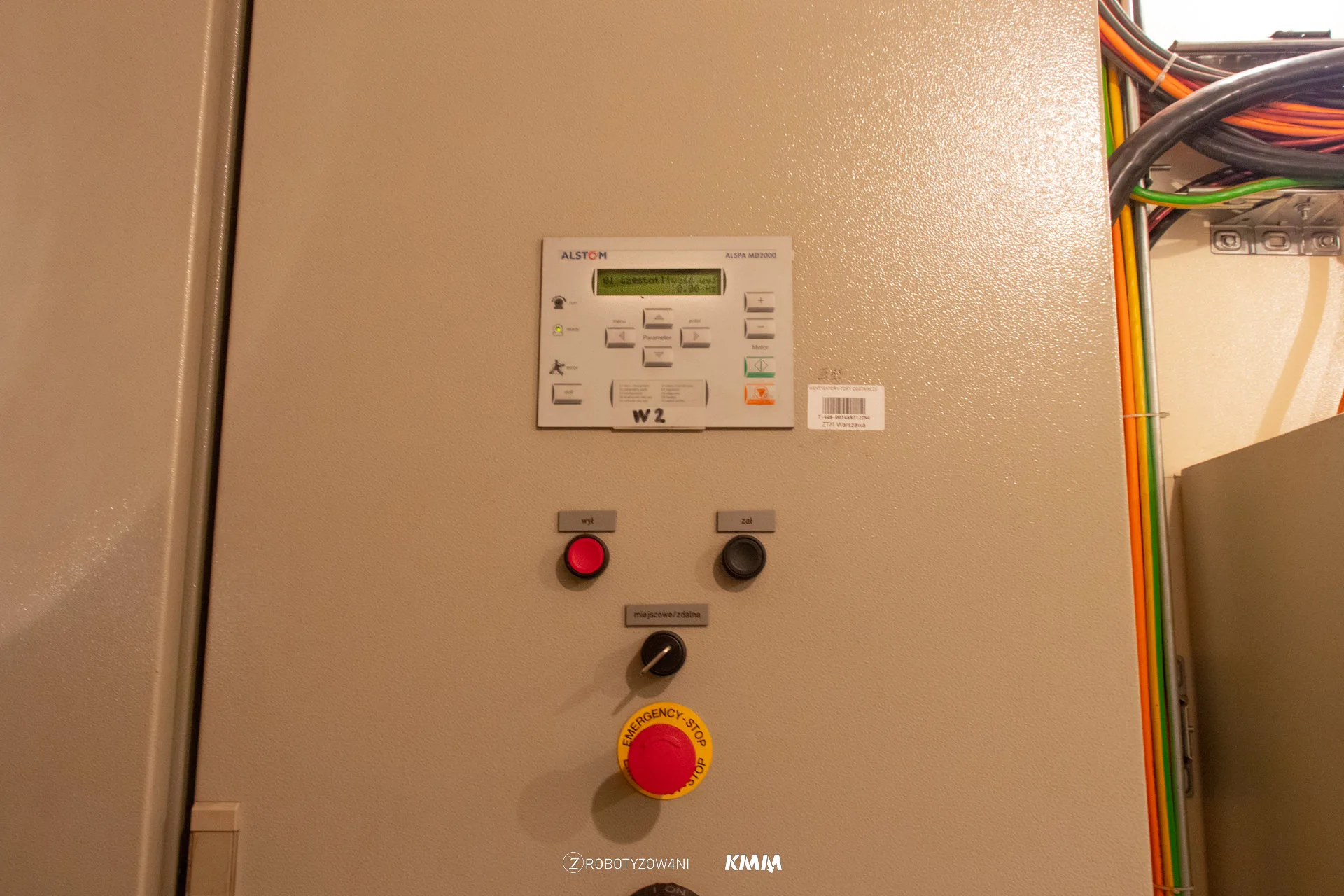
The difference is the direction. The station plant extracts air from the station, while the Krechowiecka plant supplies it to the tunnel and to the sidings where trains are stabled. As is tradition on our tours, one fan was started for us. A few people stepped into the air stream, and once it stopped everyone agreed it would make an excellent hair dryer.
Marymont: the technical gallery above the track
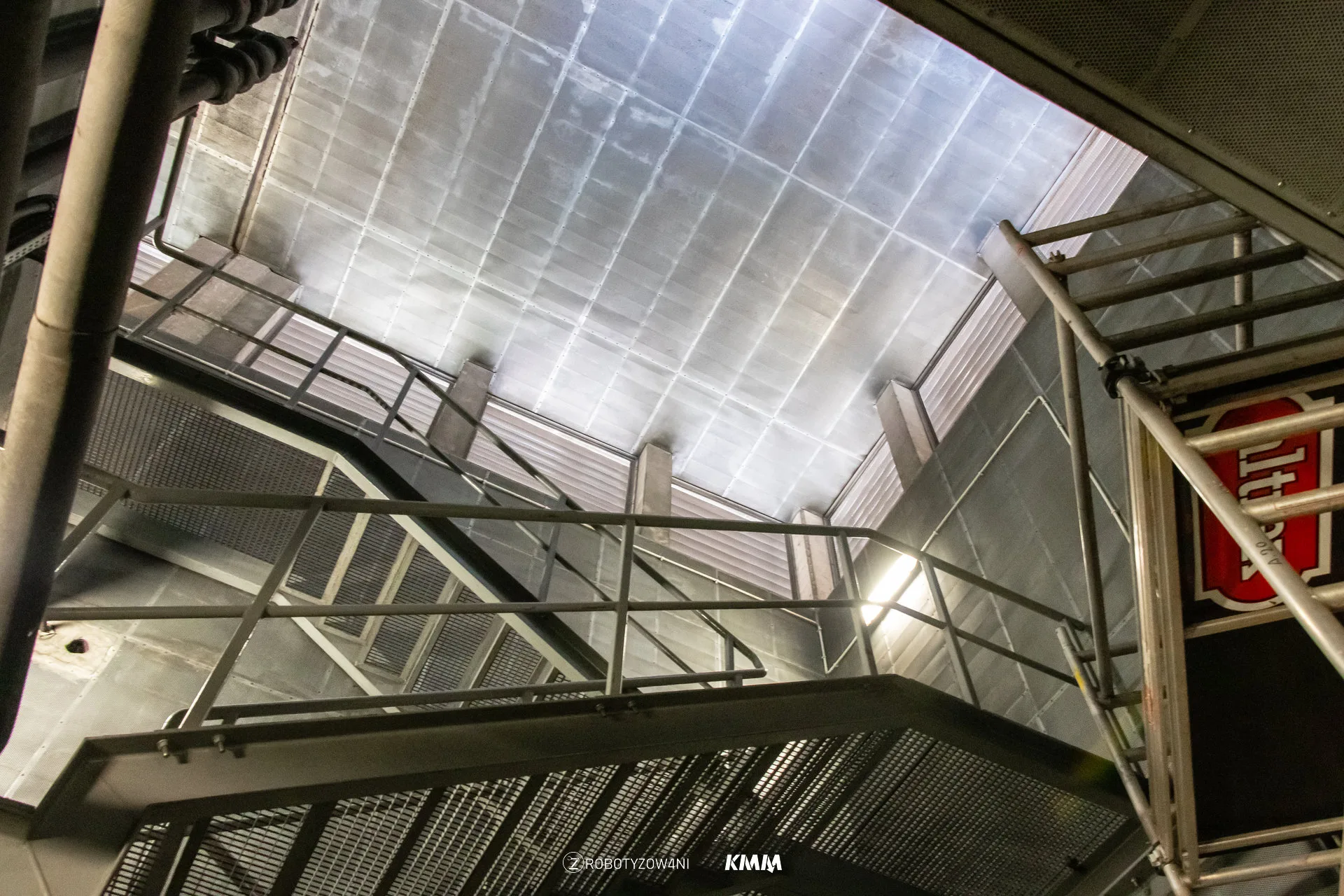
We walked back through the car park and took a train to A19 Marymont. Here, too, we visited the station ventilation plant and then climbed the stairs to rooms at mezzanine level. A final door led us out onto the technical gallery above the track towards Kabaty.
Passengers can see it from the mezzanine on the opposite side, though few wonder what it is for. Staff use it to walk between the station’s two blocks of technical rooms.
Młociny: the supervisor behind the mirror
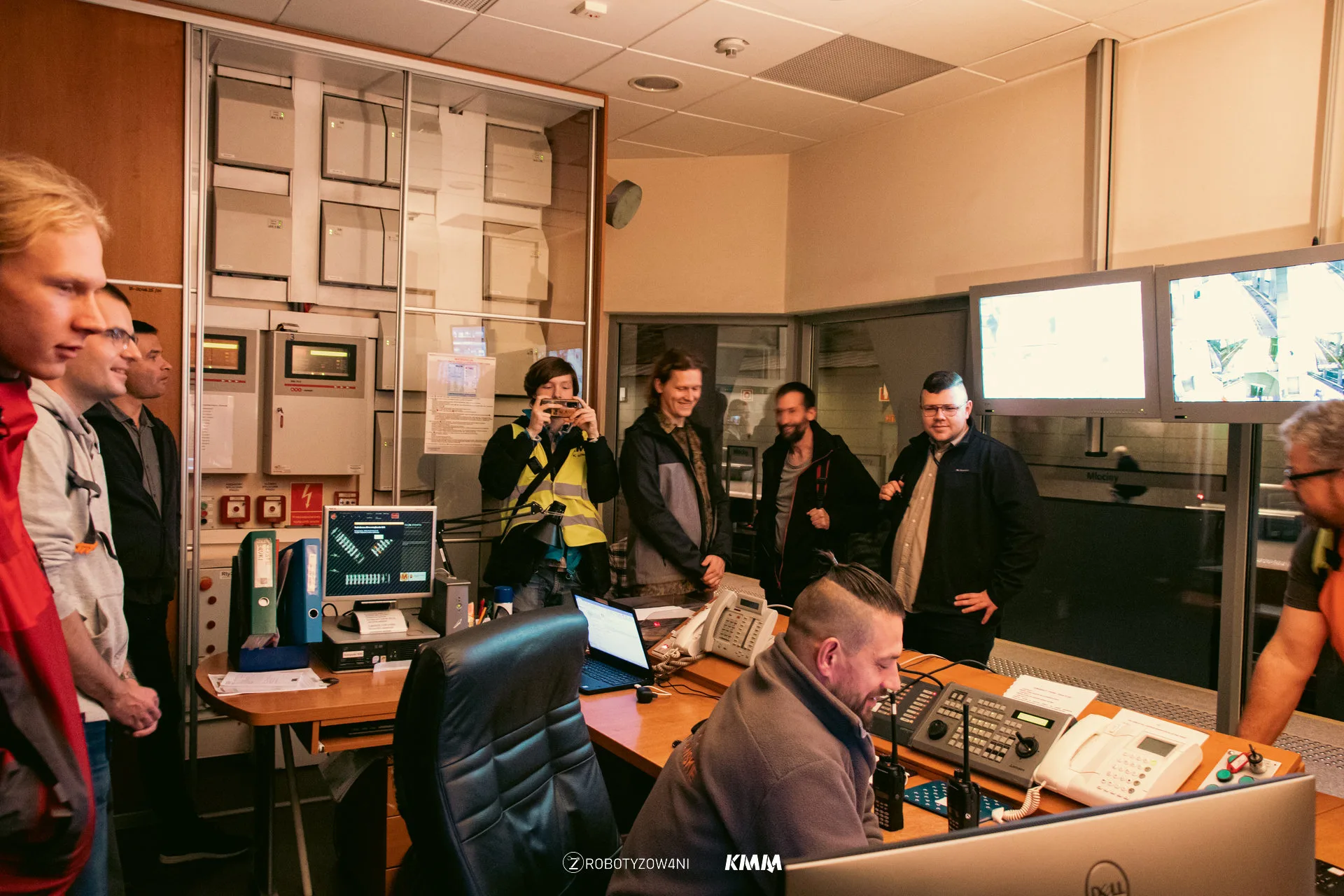
We reached A23 Młociny by train. First came the station supervisor’s post next to the platform where trains from Kabaty arrive. It is hidden behind several large one-way mirrors. Passengers leaving the train often check their hair in them, unaware that someone is at work on the other side.
The supervisor is responsible for safety at the station and for the correct operation of its systems, and assists with controlling the trains that terminate at Młociny. One of the participants, a Metro Warszawskie employee, shared plenty of stories about the metro’s systems and procedures.
Sound attenuators: why you cannot hear the fans
Finally we entered the A23 station ventilation plant, which our tours had never visited before. Behind the fans we walked through the sound attenuators to the air intake next to the Młociny tram loop.
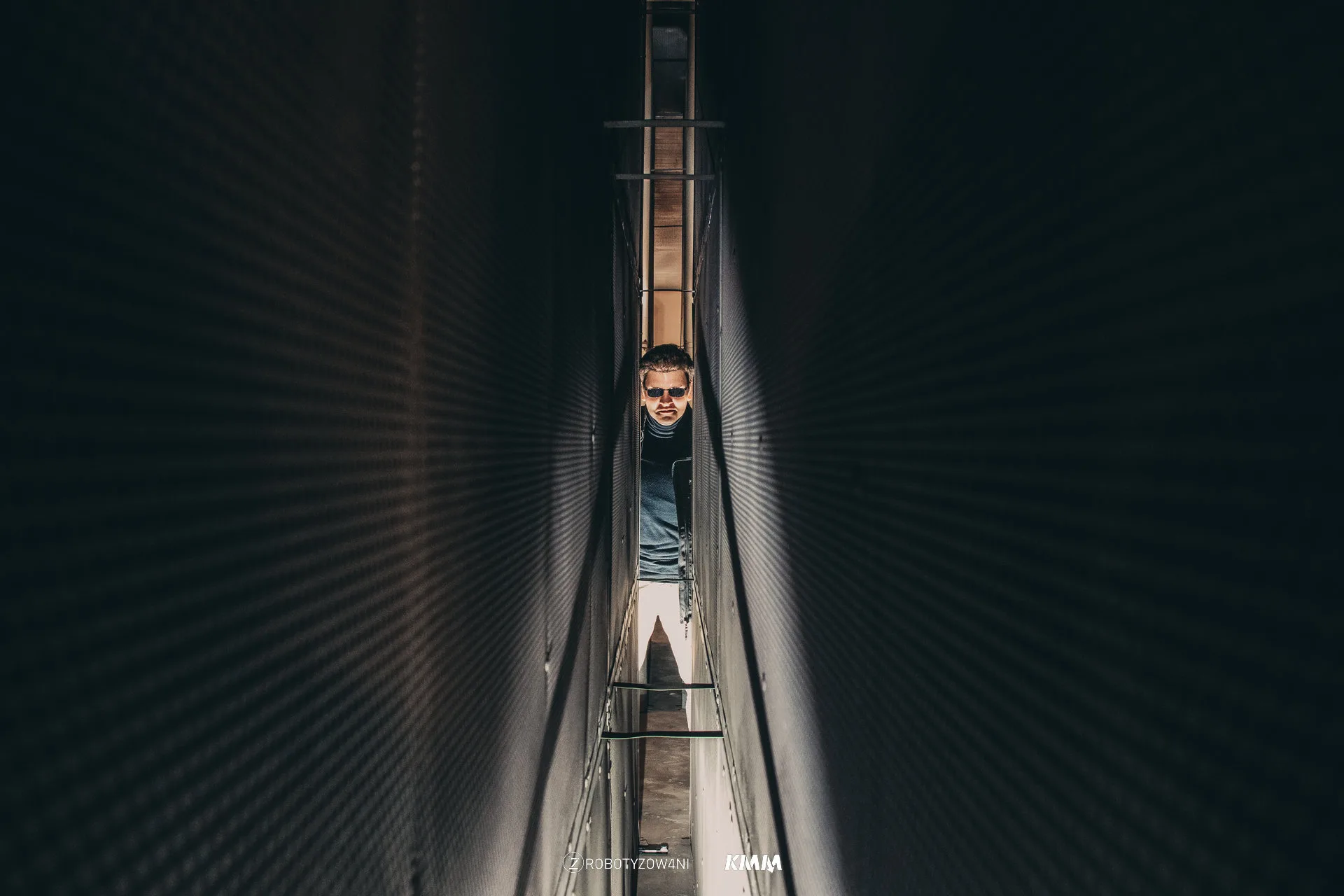
Metro fans, both station and tunnel ones, are very loud. The noise would disturb passengers and people living near the intakes, so every ventilation plant has sound attenuators: tall modules placed along the air path and filled with soft, sound-absorbing material.
To show how well they work, a fan was switched on while the group stood on the far side of the attenuators. All that was left was a faint, muffled hum. A technician told us that two people on opposite sides of an attenuator cannot understand each other. Several participants tried it: even with their heads right against it, a shout reached the other side as a whisper.
The tour ended on the platform at Młociny. We thank Metro Warszawskie for opening these facilities and demonstrating the ventilation equipment of line M1. This visit closed the series on M1, and the next destination was line M2.
At a glance
| Date | 24 October 2022 |
| Series | “See how the metro breathes underground”, part 3 (last on M1) |
| Stations | A18 Plac Wilsona (start), A19 Marymont, A23 Młociny |
| Facilities | station ventilation plants at A18, A19 and A23, supply plant on Krechowiecka Street, technical void under Słowackiego Street, technical gallery at A19, station supervisor’s post at A23 |
| Fans | two each in the A18 and Krechowiecka chambers, made in the Czech Republic |
| Patronage | Metro Warszawskie sp. z o.o. |
Frequently asked questions
What is the technical void under Słowackiego Street?
It is a space above the stabling sidings beyond A18 Plac Wilsona station. It was planned as an underground car park for more than 100 cars, but no vehicle access was built in 2005 and it never opened.
What are the barred “huts” on Krechowiecka Street?
They are metro air intakes. A duct leads from them to a ventilation plant where two fans supply air to the tunnel and the sidings beyond Plac Wilsona station.
How does the station plant differ from the Krechowiecka plant?
The station plant at Plac Wilsona extracts air from the station, while the Krechowiecka plant supplies air. Both use the same type of fan.
Where is the station supervisor’s post at Młociny?
Next to the platform where trains from Kabaty arrive, behind large one-way mirrors. Passengers only see the mirrors.
Why do metro ventilation plants have sound attenuators?
The fans are very loud. Attenuators are tall modules with soft filling placed along the air path, so only a faint hum can be heard at the intakes and in the stations.
Trip report originally published on the website of the Metro Enthusiasts’ Circle (Koło Miłośników Metra) (9 November 2022). Text rewritten and translated by the Zrobotyzowani editorial team. Original Polish report on kmmetra.pl. Photos: Zrobotyzowani / Koło Miłośników Metra.